


5-10 days
Payments
Description
Description
Fiberon™ PETG-ESD : PETG ESD pour les applications électroniques (anciennement PolyMax™ PETG-ESD)
Protection contre les décharges électrostatiques (ESD)
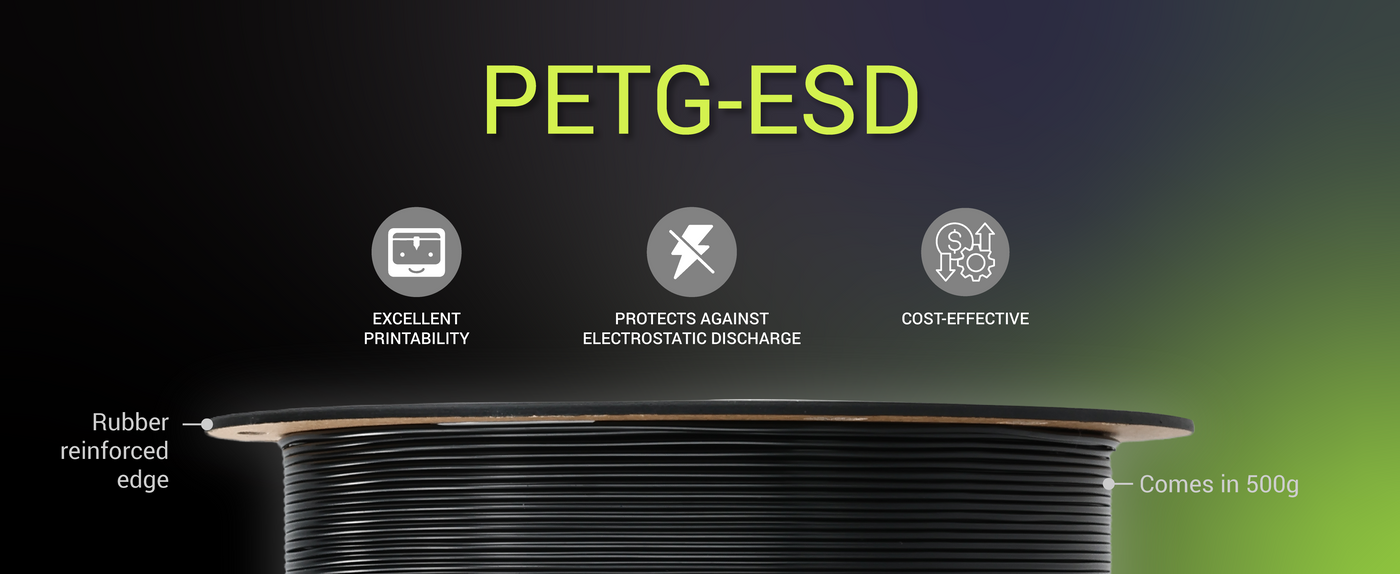
Fiberon™ PETG-ESD est spécialement conçu pour offrir une protection fiable contre les décharges électrostatiques (ESD), ce qui en fait un excellent choix pour l’impression 3D de pièces utilisées dans la fabrication, l’assemblage et la manipulation de composants électroniques. Cette propriété contribue à protéger les composants électroniques sensibles contre les dommages causés par l’électricité statique pendant la production et l’utilisation.
Résistance accrue
En plus de sa protection contre les décharges électrostatiques, Fiberon™ PETG-ESD offre une résistance améliorée par rapport au PETG standard, assurant une meilleure résistance aux chocs et une plus grande durabilité pour les applications industrielles exigeantes.
Compoundage avancé à base de nanotubes de carbone
Ce filament est composé de nanotubes de carbone, qui lui confèrent ses propriétés de protection contre les décharges électrostatiques. L’utilisation de nanotubes de carbone garantit une conductivité uniforme dans toute la pièce imprimée, préservant la protection ESD même après usinage ou usure.
Applications idéales
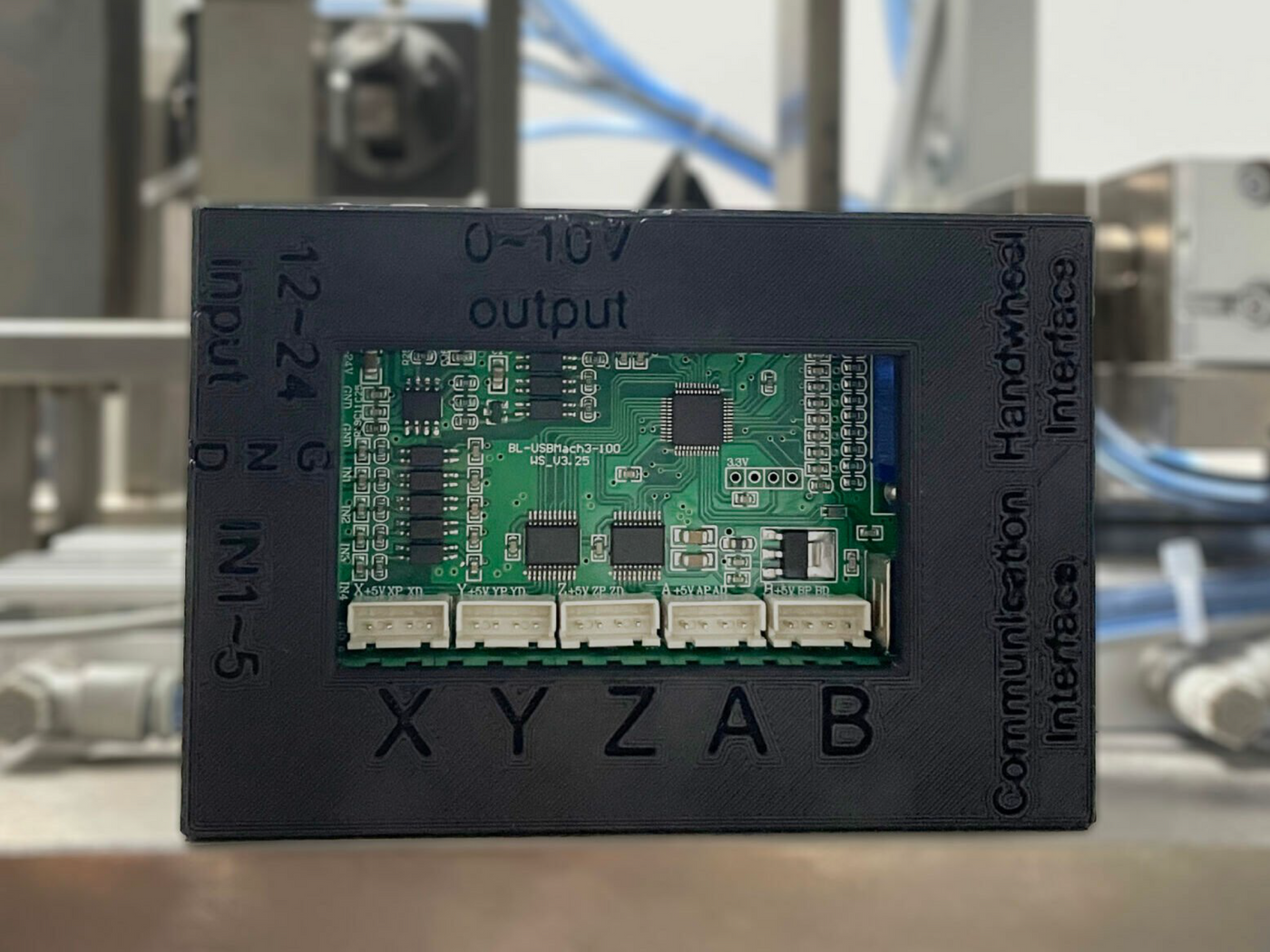
- Boîtiers et enveloppes pour composants électroniques
- Gabarits et montages pour l’assemblage de circuits imprimés
- Plateaux et solutions de stockage pour composants électroniques
- Outils et pièces utilisés dans des environnements sensibles aux décharges électrostatiques
Choisissez Fiberon™ PETG-ESD pour vos projets électroniques lorsque vous avez besoin d’un matériau d’impression 3D robuste, fiable et protégé contre les décharges électrostatiques.
REMARQUE : ™ PETG-ESD est composé de nanotubes de carbone :
ici se trouve une étude concernant l’ABS composé de nanotubes de carbone.
Exigences d’impression
Paramètres d’impression
Paramètres d’impression
Fiberon™ PETG-ESD
- ESD Protection
- Enhanced Toughness
- Carbon Nanotube Technology
- Ideal for Electronics
- Ready to Print ;
Fiberon™ PETG-ESD - Noir / 0.5kg est en rupture de stock et sera expédié dès qu'il sera de nouveau disponible.

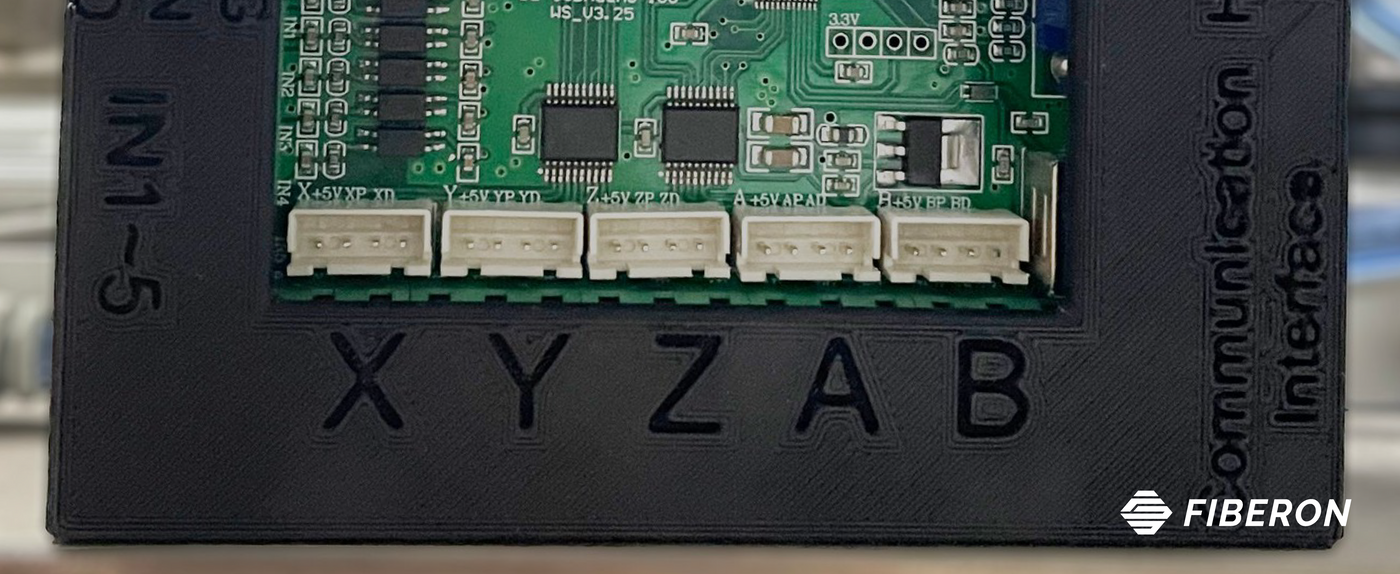
Spécifications techniques
Tout ce dont vous avez besoin avant de lancer l’impression
- Use a hotend suitable for the 250-290°C nozzle-temperature range; an all-metal hotend is recommended.
- Dry at 65°C for 3 hours if the filament has absorbed moisture, and keep it dry during use.
- Keep the cooling fan OFF ; use a 70-80°C build plate.
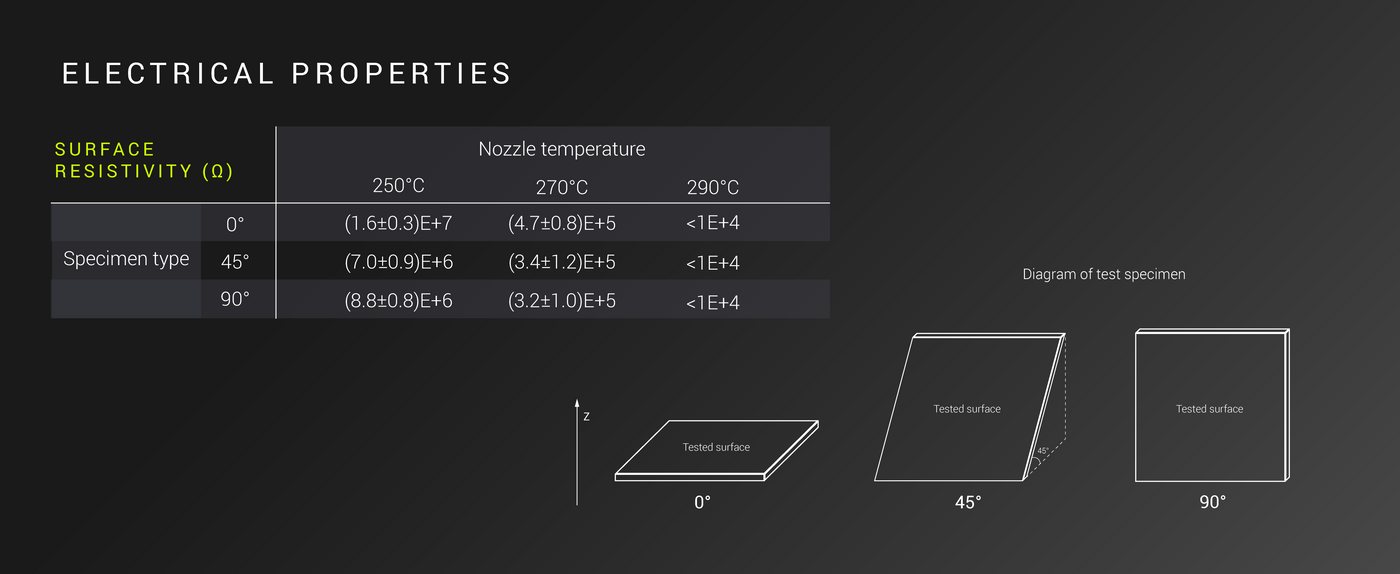
- Nozzle temperature and print orientation strongly affect surface resistivity. Higher nozzle temperatures lower resistivity; validate the finished part for the intended ESD requirement.
- Annealing is not specified for this material.
| Property | X-Y | Z | Value | Method |
|---|---|---|---|---|
| Density | — | — | 1.24 g/cm³ Important | ISO 1183 |
| Tensile strength | 36.1 MPa Important | 20.7 MPa Important | — | ISO 527 |
| Elongation at break | 7.3 % Important | 1.8 % Important | — | ISO 527 |
| Bending strength | 54 MPa Important | 24.1 MPa Important | — | ISO 178 |
| Bending modulus | 1650.8 MPa Important | — | — | ISO 178 |
| Young's modulus | 1983 MPa Important | 1626.4 MPa Important | — | ISO 527 |
| Charpy, unnotched | — | 5.2 KJ/m² Important | — | ISO 179 |
| Charpy, notched | 5.7 KJ/m² Important | — | — | ISO 179 |
| Glass transition temperature (Tg) | — | — | 77 °C Important | ISO 11357 |
| Vicat softening temperature | — | — | 86 °C Important | ISO 306 |
| HDT (0.45 MPa) | — | — | 76 °C Important | ISO 75 |
| HDT (1.8 MPa) | — | — | 72 °C Important | ISO 75 |
Testé sur des échantillons avec un taux de remplissage de 100 %. X-Y = transversalement aux couches, Z = entre les couches (adhésion interlaminaire).
Foire aux questions
Vous avez des questions ? Nous avons les réponses. Du choix du matériau adapté à l’entretien de vos bobines, voici tout ce que vous devez savoir au même endroit.
How long will PETG-ESD remain ESD safe?
Do you have any further data?
Will the spools work in an AMS?
What is the difference between PET and PETG?
Customers praised this ESD-safe filament for printing jigs and tools in electronics manufacturing, noting it "prints well and consistently" while being "more affordable than pretty much any other name brand." Quality and speed performance were highlighted, though some reported occasional plate adhesion issues and residue.
I use this filament to print ESD-safe jigs and tools for the electronics manufacturing company I work for. It prints well and consistently while being more affordable than pretty much any other name brand ESD filament on the market. Now I'm just waiting for Polymaker to do a PLA-ESD.
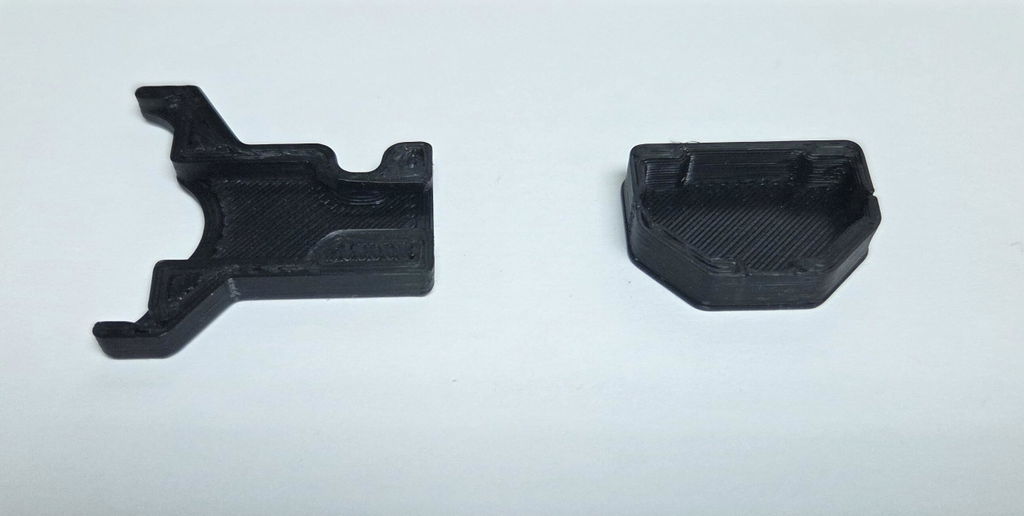
The filament prints great, but it does have an issue with sticking to the plate sometimes and leaving residue on the plate.
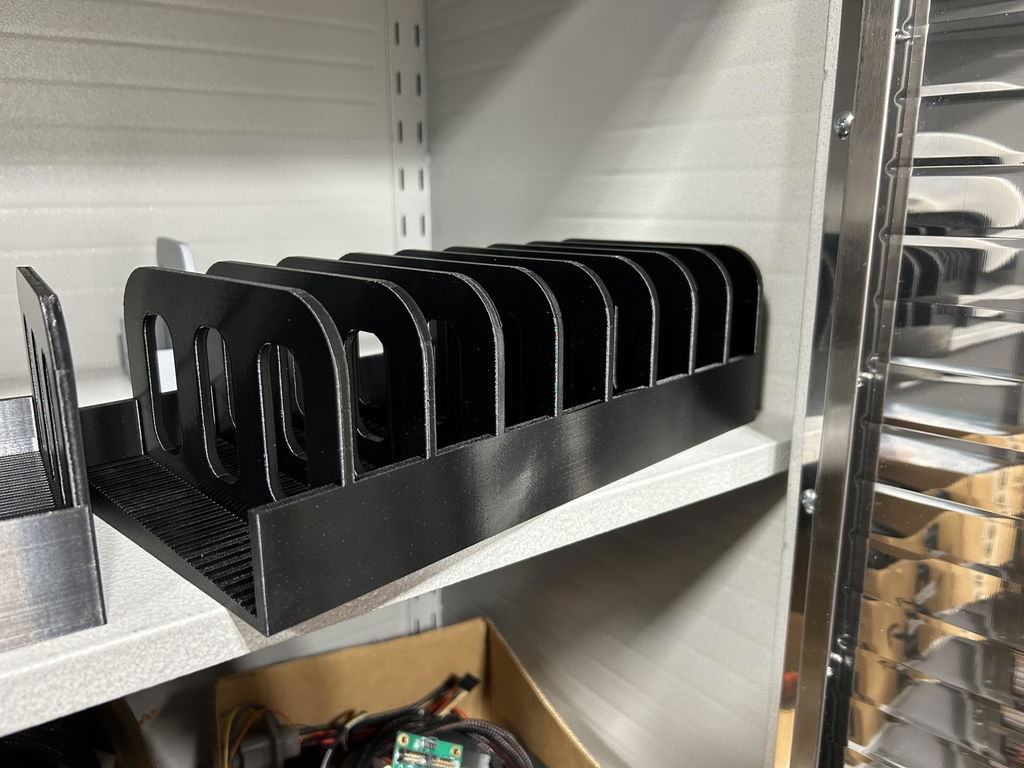
PETG-ESD filament is great! Very useful for printing ESD safe jigs for assembly. Print quality is good on Bambu printers.
Many people confuse ESD with conductive filament. This has a resistance around 1-100M ohms (10^6-10^8). You cannot test this with a basic multimeter, and even then the resistance changes as your voltage changes. With a proper ESD tester, you can measure its resistance.
Really like it, prints really well and can take speed.
This is by far the best PETG ESD I have used and is very competitively priced!I would really like to see 1kg spool though, 0.5kg spools are really annoying to work with since I'm constantly having to swap to a new spool mid print. And, with the switch to the Fiberon branding, they started taping the end of the filament to the spool core. This is a big PROBLEM as it can get stuck during when the filament runs out cause the filament runout sensor not to trigger. PLEASE revert back to not using tape.Also, I'd really like to see Polymaker submit well tuned filament profiles for all the Prusa machines to Prusa Slicer.
Printed great in my x1c. I through it straight from the package into my dryer for like 12 hours then printed from the dryer. No issues
