
Épuisé
Nouvelle arrivée
Nouvelle arrivée
Épuisé
Nouvelle arrivée
Épuisé
Nouvelle arrivée
Épuisé
Nouvelle arrivée
Épuisé
Nouvelle arrivée


1
de
16
Délai de livraison
5–10 jours
5–10 jours
Satisfaction garantie
Retours sous 40 jours
Paiements
sécurisés
sécurisés
Description
Description
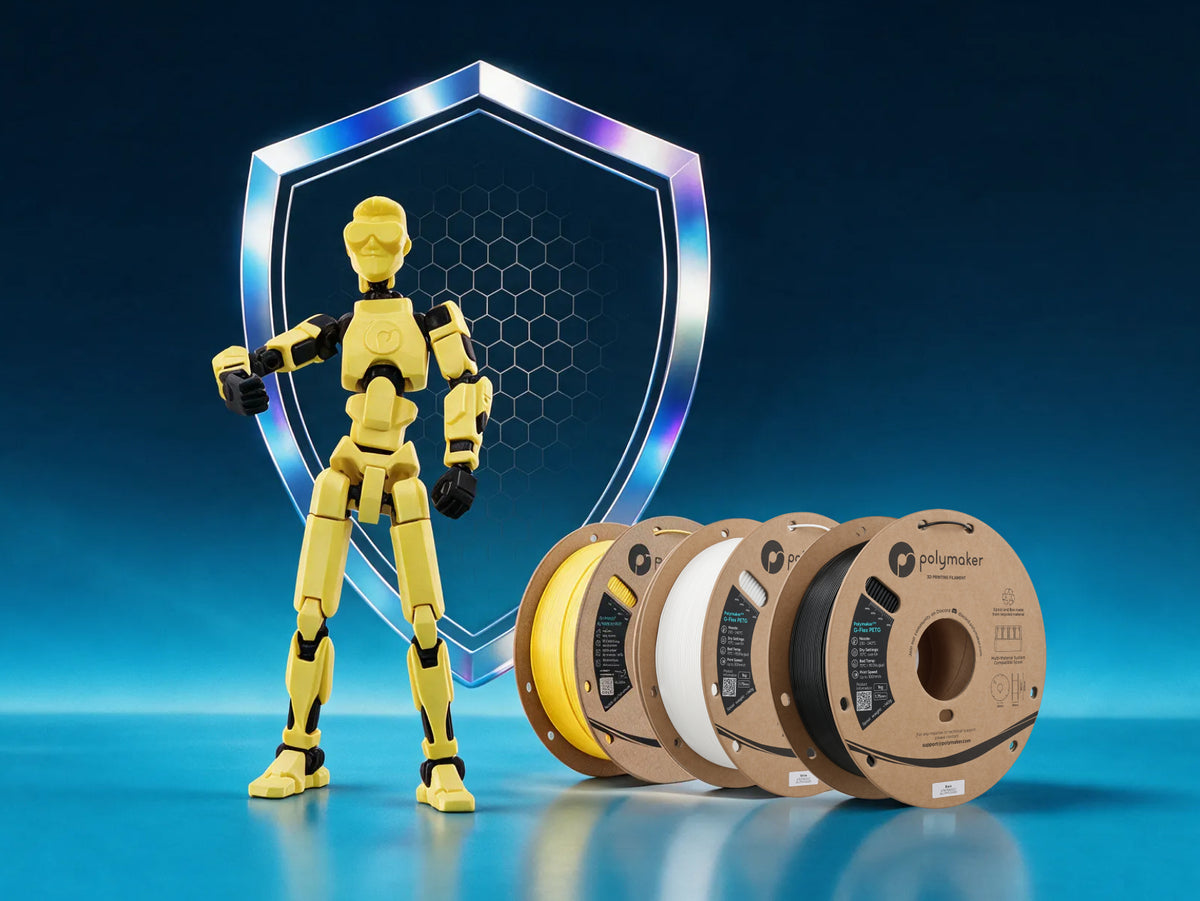
Easy to print, hard to break
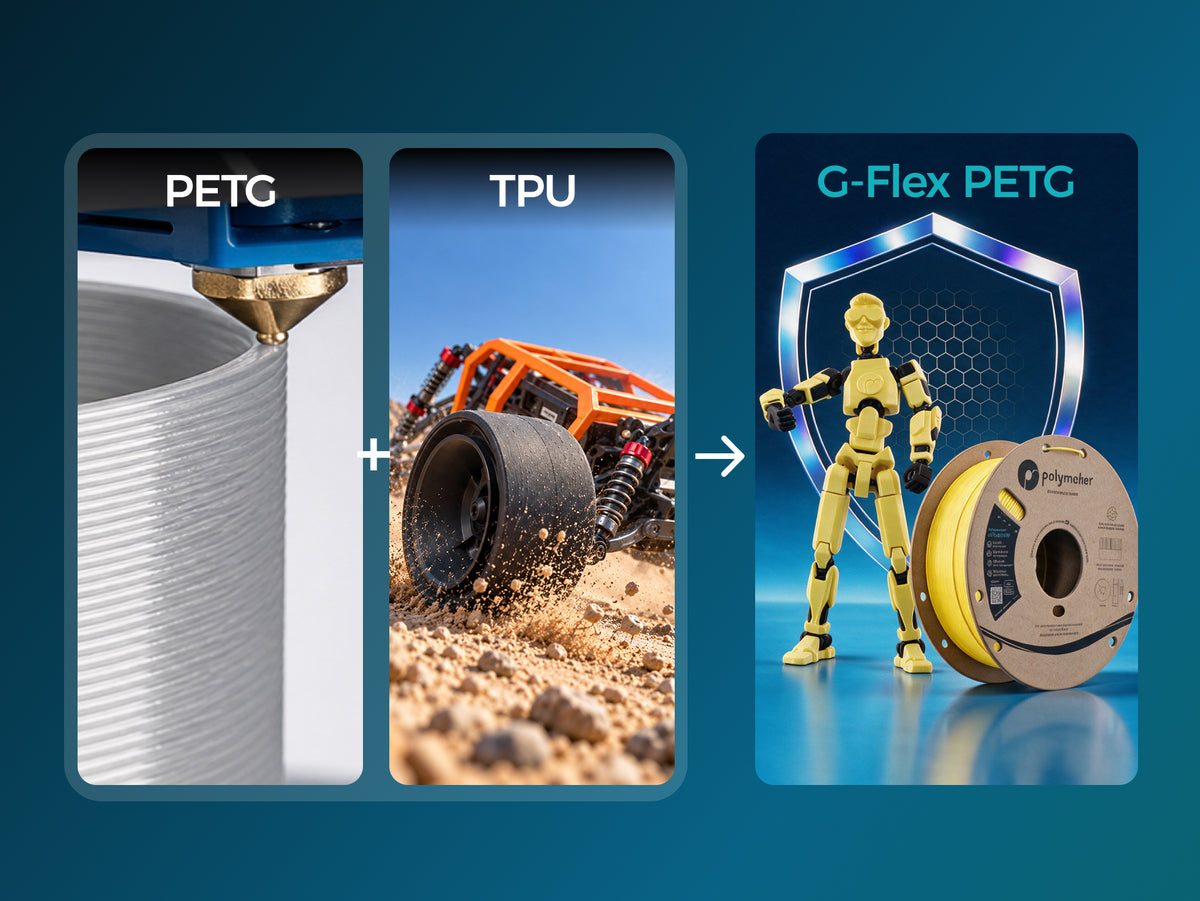
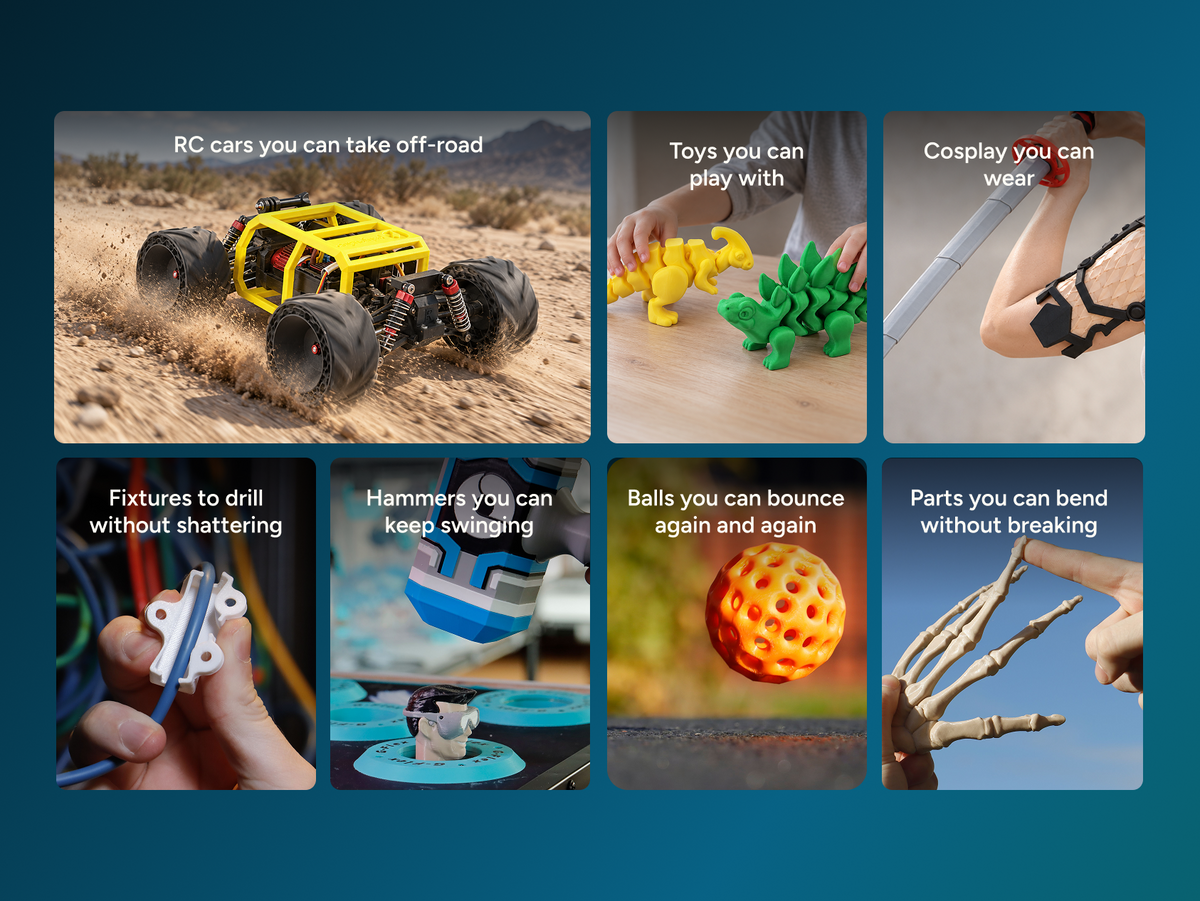
Polymaker™ G-Flex PETG is a highly durable, elastic PETG that combines PETG’s printing ease and shape retention with TPU’s elasticity and impact absorption. Designed for everyday creations and long-term use, it brings toughness, fine detail, and added flexibility to functional parts, articulated models, props, cosplay accessories, and RC or drone parts.
Impact-tough durability for repeated use
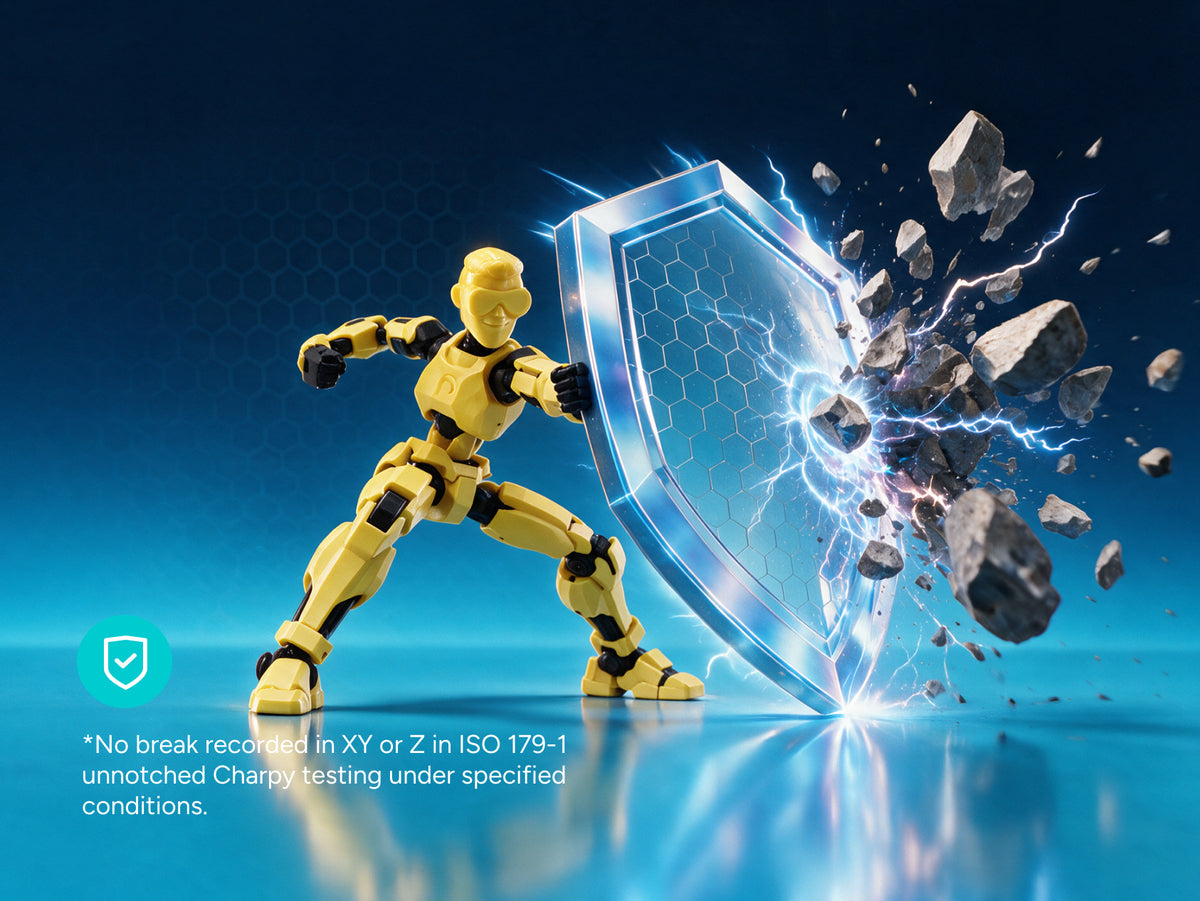
From accidental drops to bending, assembly, and transport, G-Flex PETG helps prints withstand the demands of real-world use. Its elasticity and impact absorption make it a durable choice for parts that need more toughness than PLA. In ISO 179-1 unnotched Charpy impact testing, all tested specimens recorded “No Break” in both XY and Z orientations under the test conditions.
PETG-like printing ease, fine details included
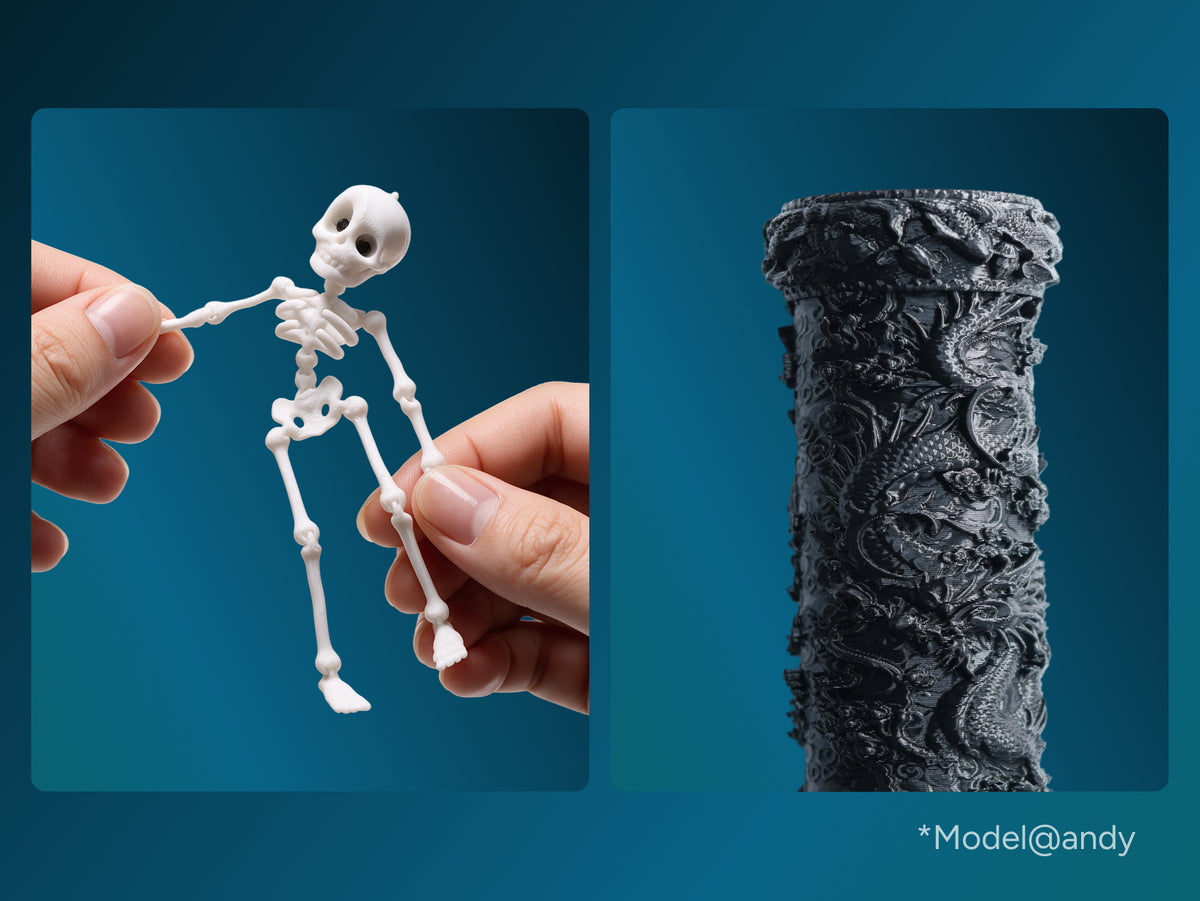
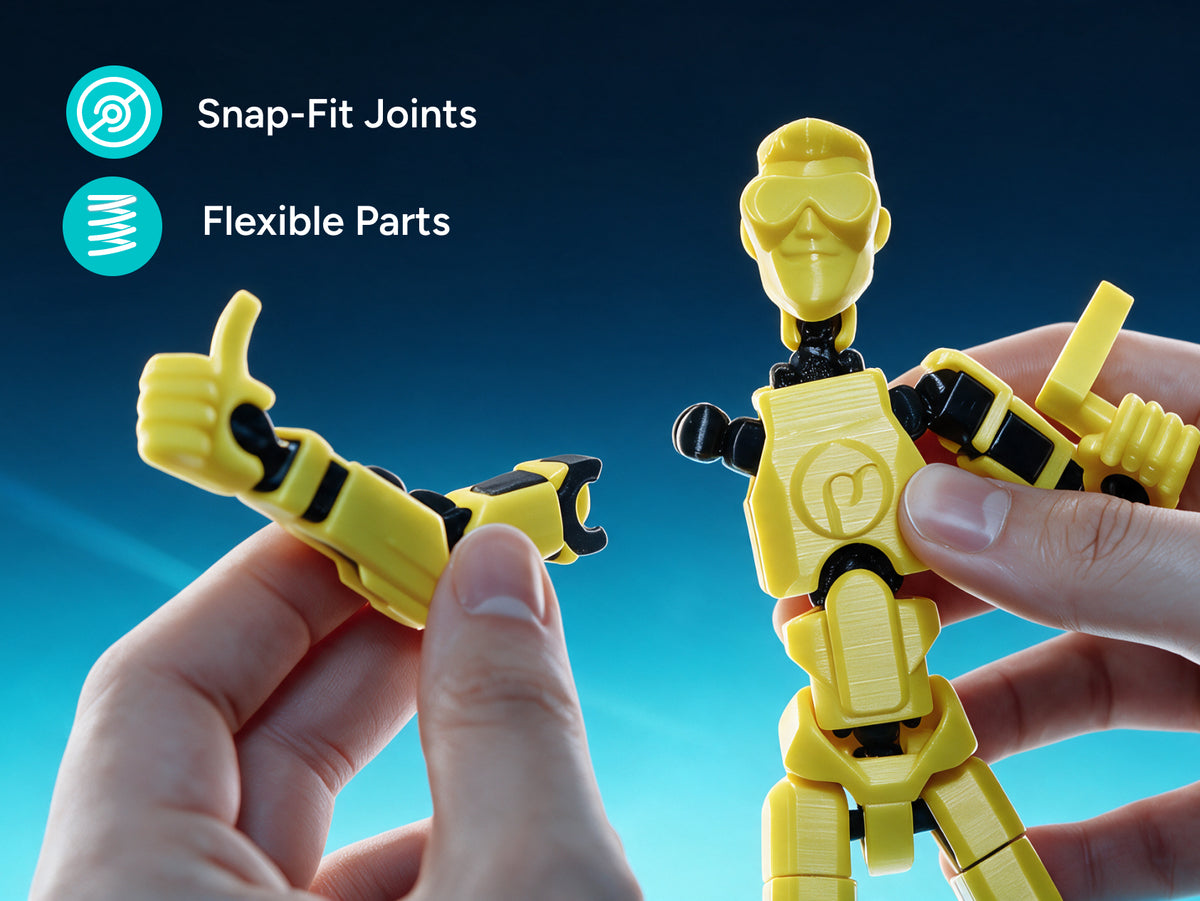
G-Flex PETG makes tough, elastic prints accessible to users familiar with PLA and PETG. It retains defined shapes, fine features, and complex geometry, making it well suited for moving joints, intricate models, and snap-fit assemblies.
Recommended settings and common printer presets provide a straightforward starting point. With print speeds up to 300 mm/s and volumetric flow up to 24 mm³/s, it supports efficient printing when speed and flow are configured together.
Safety from printing to handling
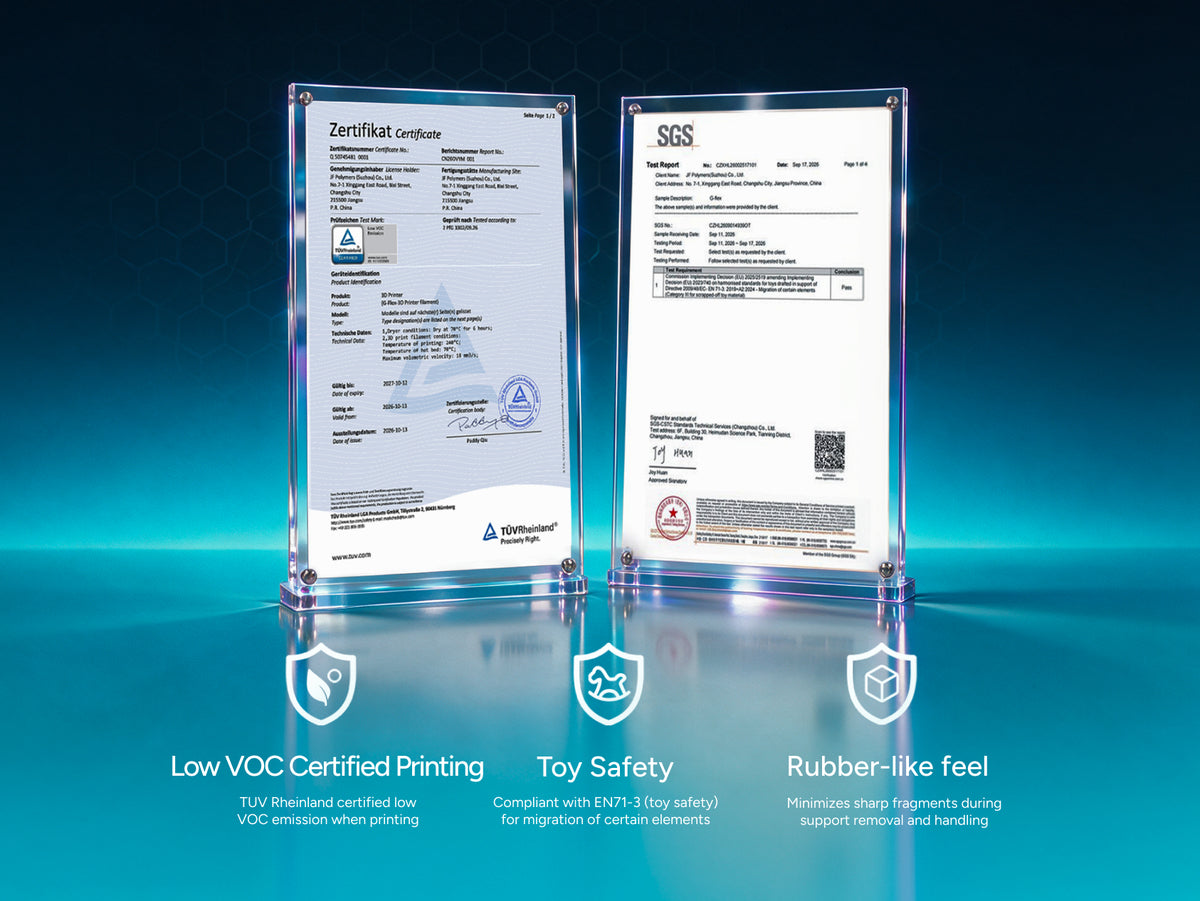
G-Flex PETG offers VOC-certified low-emission printing and complies with EN 71-3 (toy safety) for migration of certain elements. Its resistance to brittle breakage helps reduce sharp fragments during handling and support removal.
Bright colors for fun and functional prints
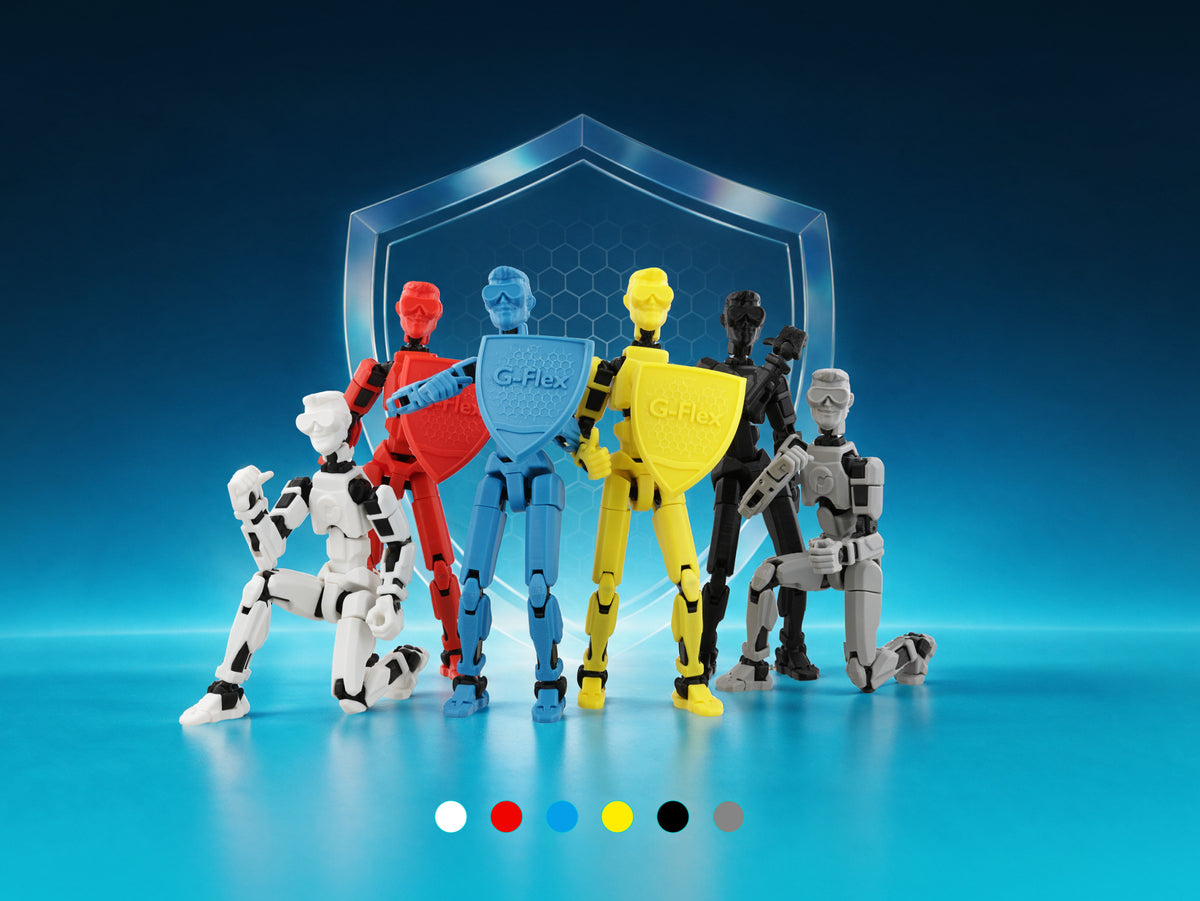
Bring your ideas to life with 6 colors. From expressive models and colorful props to practical everyday parts, the palette gives you more room to create. Compatibility with Bambu AMS, AMS 2 Pro, and Creality CFS, using the recommended settings, supports multicolor projects.
Exigences d'impression
LayerHub est désormais en ligne. Une plateforme de préréglages de filament créée par la communauté — ouverte à chaque Marque de filament et à toutes les imprimantes. Chaque préréglage est accompagné d’une photo d’un objet réellement imprimé pour en attester.
Paramètres d'impression
Paramètres d'impression
Polymaker™ G-Flex PETG
Épuisé
Nouvelle arrivée
Nouvelle arrivée
Épuisé
Nouvelle arrivée
Épuisé
Nouvelle arrivée
Épuisé
Nouvelle arrivée
Épuisé
Nouvelle arrivée
Ajoutez au panier pour voir le prix réduit
$21.99
Prix unitaire
/
Indisponible
1.75mm
UGS :
PM1022060
Code HEX :
#070808
<p>Gagnez%20[points_amount]%20lorsque%20vous%20achetez%20cet%20article.</p>
Caractéristiques principales
- Hard to Break
- Easy Printing
- Fine Detail
- Low-Emission Printing


Découvrez les créations de la communauté
Spécifications techniques
Tout ce qu’il faut savoir avant de lancer l’impression
Buse230–240°C
Plateau70°C
Vitesse max.300mm/s
EnceinteNon requis
Séchage70°Cpendant 6h
CompatibilitéFDM printers with a heated bed
Conseils d'impression
- Preset: Start with the official G-Flex preset for your printer and slicer. Use a standard 0.4 mm nozzle as the starting point.
- Build plate: Set the bed to 70°C and use a PEI surface without glue. Avoid cold-print plates such as BIQU CryoGrip.
- Speed and flow: Set print speed and volumetric flow together. Use up to 300 mm/s and up to 24 mm³/s.
- Cooling and retraction: Use 0–90% cooling. For direct-drive extruders, start with 1.0 mm retraction at 30 mm/s.
- Drying and storage: Print straight from a freshly opened bag and reseal the spool with desiccant after use. If moisture causes stringing, dry with PolyDryer Level 3 for 24 hours, AMS 2 Pro at 65°C for 24 hours, or an oven at 70°C for at least 6 hours.
| Propriété | X-Y | Z | Valeur | Méthode |
|---|---|---|---|---|
| Densité | — | — | 1.25 g/cm³ Important | ISO 1183 |
| Résistance à la traction | 40.27 MPa Important | 18.49 MPa Important | — | ISO 527 |
| Allongement à la rupture | 306.53 % Important | 104.82 % Important | — | ISO 527 |
| Résistance à la flexion | 13.96 MPa Important | 10.61 MPa Important | — | ISO 178 |
| Module de flexion | 451.55 MPa Important | 350.29 MPa Important | — | ISO 178 |
| Module de Young | 431.49 MPa Important | 330.7 MPa Important | — | ISO 527 |
| Résistance au choc Charpy, non entaillé | No Break Important | No Break Important | — | ISO 179 |
| Température de transition vitreuse (Tg) | — | — | 63.8 °C Important | ISO 11357 |
| Température de ramollissement Vicat | — | — | 89.9 °C Important | ISO 306 |
| HDT (0.45 MPa) | — | — | 61.5 °C Important | ISO 75 |
| HDT (1.8 MPa) | — | — | 46.7 °C Important | ISO 75 |
Essais réalisés sur des éprouvettes avec 100% infill. X-Y = dans le plan des couches, Z = entre les couches (Adhérence inter-couches).
Questions fréquentes
Vous avez des questions ? Nous avons les réponses. Du choix du Matériau adapté à l’entretien de vos bobines, retrouvez ici tout ce qu’il faut savoir.

