


5–10 days
Payments
Description
Description
Print Industrial-Grade ESD Parts with Polymaker™ Fiberon PA612-ESD
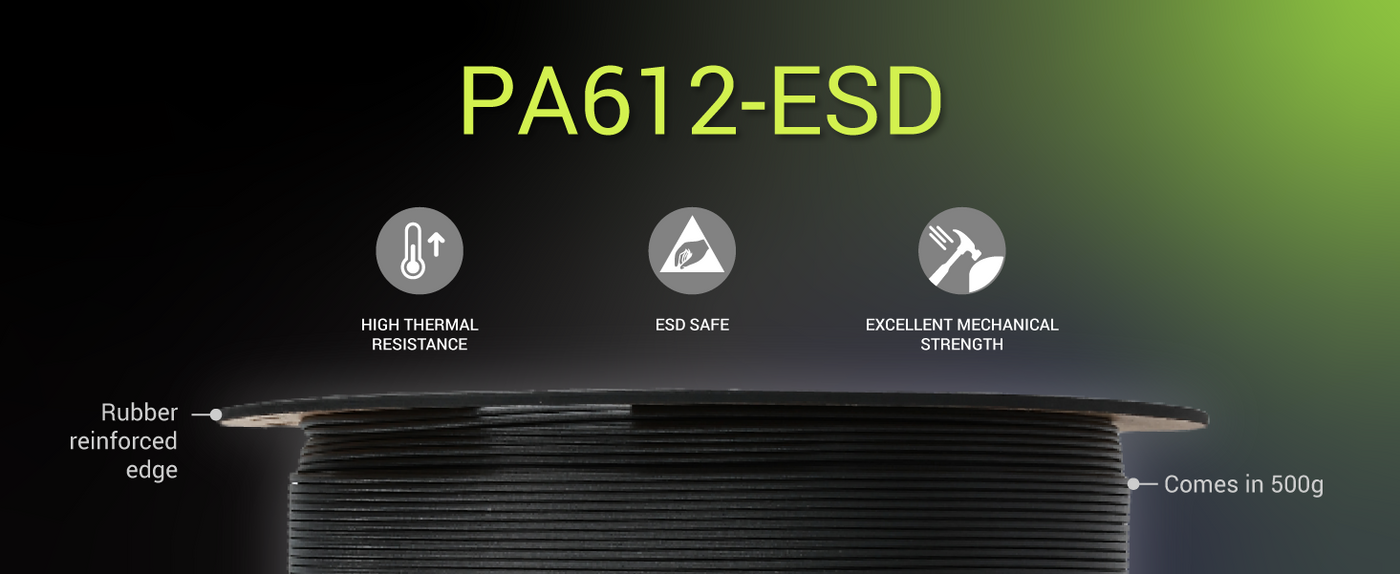
Engineered for professionals who need performance where it counts. With built-in ESD safety, carbon fiber reinforcement, and high thermal stability, this nylon filament is your go-to material for demanding electronic and manufacturing applications.
ESD-Safe and Ready for Action
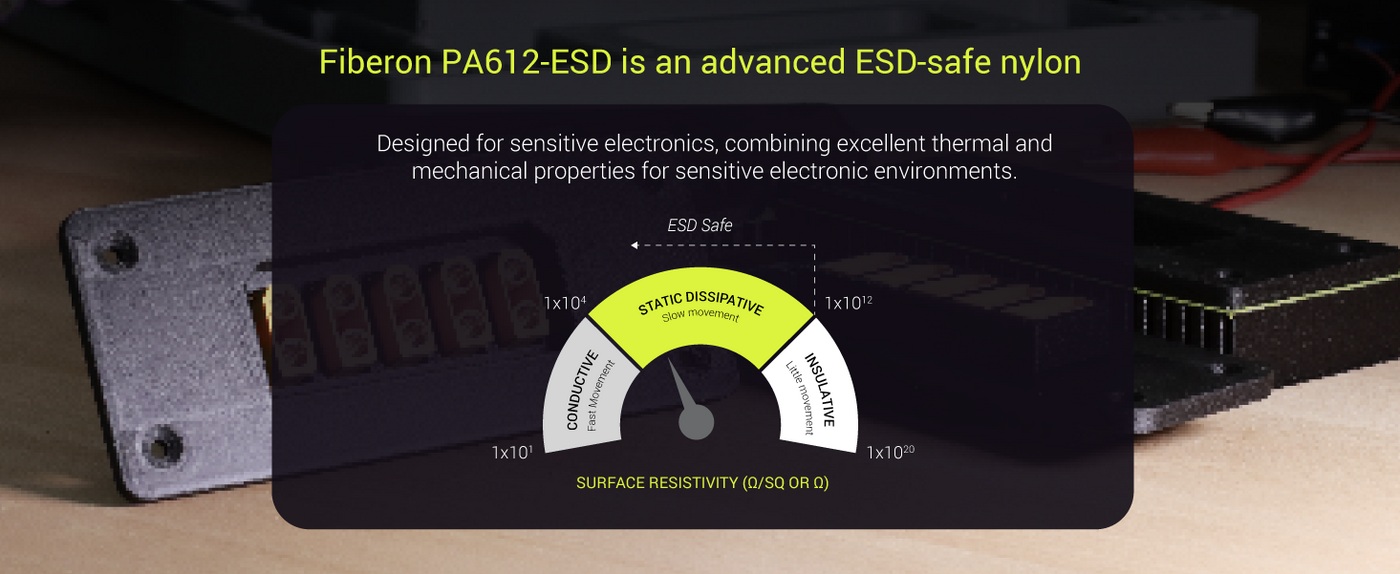
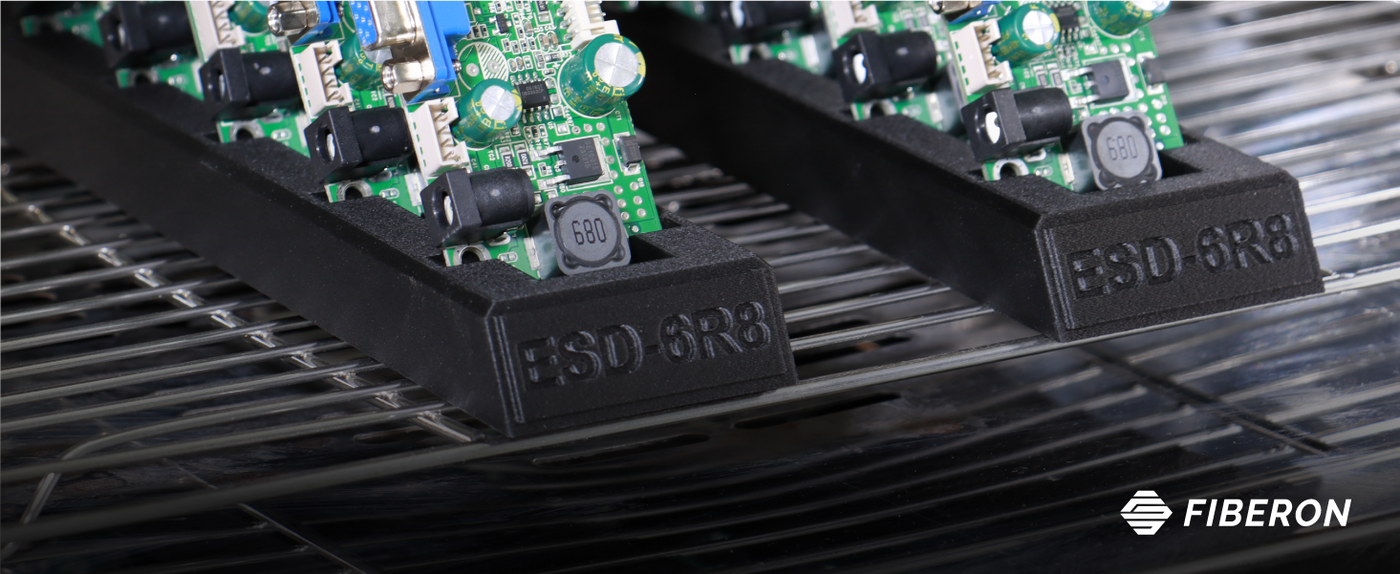
With a surface resistivity of 10⁴–10⁷ Ω/sq, Fiberon PA612-ESD protects sensitive components from static discharge—ideal for PCBs, enclosures, and cleanroom tools.
High Strength & Excellent Dimensional Accuracy
Reinforced with CNT and 10% carbon fiber, this filament delivers high stiffness, 84 MPa XY tensile strength, and consistent dimensional accuracy.
Built for High Heat
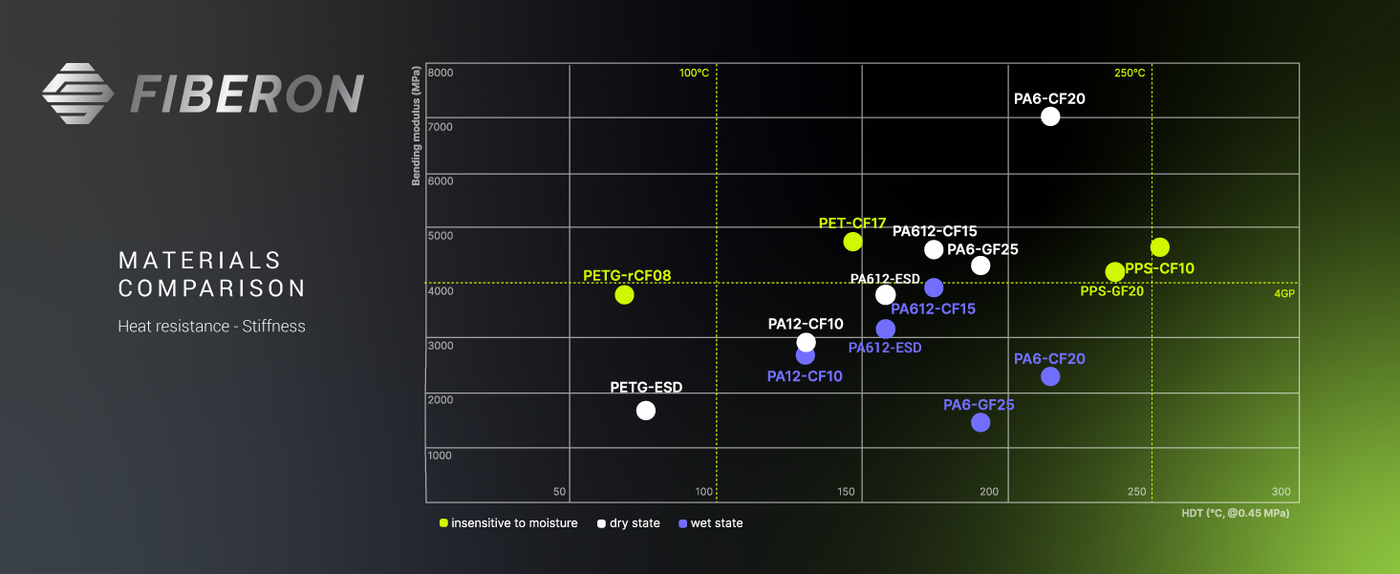
Maintain mechanical integrity in high-temperature environments with a heat deflection temperature of up to 157 °C at 0.45 MPa.
Reliable Printing, No Surprises
Prints fast—up to 300 mm/s—with low warping and excellent surface finish. Supports self-supporting structures and stays stable across long jobs.
AMS Compatible, Moisture & Tangle Free
Each spool is vacuum-sealed, tangle-free, and AMS-compatible—so your prints stay smooth and your workflow uninterrupted.
Need More ESD Options?
Check out: Polymaker Fiberon PETG-ESD
NOTE: ™ PA612-ESD is compounded with carbon nano-tubes:
Here is a research regarding ABS compounded with carbon nano-tubes.
Printing Requirements
LayerHub is now live. A community-built home for filament presets — open to every filament brand, every printer. Every preset comes with a real print photo to prove it.
Print Settings
Print Settings
Fiberon™ PA612-ESD
Key Features
- ESD Protection
- High Strength & Stiffness
- High Heat Resistance
- Warp-Free™ Technology :
- High-Speed Printing
Fiberon™ PA612-ESD - Black / 0.5kg is backordered and will ship as soon as it is back in stock.

Technical Specifications
Everything you need before you hit print
Printing Tips
- Use an all-metal hotend within 280-300°C and a wear-resistant nozzle, such as hardened steel or ruby.
- Store and print under dry conditions (relative humidity below 20%); dry at 100°C for 10 hours before use and feed from a dry box or heated filament dryer during printing.
- Use a 40-50°C build plate, and turn the cooling fan OFF; an actively heated chamber is not required.
- Use glue stick or Magigoo PA if bed adhesion is weak.
- If the material is used as its own support, remove the support before excessive moisture absorption to avoid permanent bonding.
- Anneal at 100°C for 16 hours when the annealed performance stated in the TDS is required.
- Nozzle temperature and print orientation affect surface resistivity; validate the finished part for the intended ESD requirement.
| Property | X-Y | Z | Value | Method |
|---|---|---|---|---|
| Density | — | — | 1.1 g/cm³ Important | ISO 1183 |
| Tensile strength | 84.3 MPa Important | 21.5 MPa Important | — | ISO 527 |
| Elongation at break | 3 % Important | 1.4 % Important | — | ISO 527 |
| Bending strength | 116.2 MPa Important | 39.5 MPa Important | — | ISO 178 |
| Bending modulus | 3745.5 GPa Important | — | — | ISO 178 |
| Young's modulus | 4293.7 GPa Important | 1784.4 GPa Important | — | ISO 527 |
| Charpy, unnotched | — | 4.5 KJ/m² Important | — | ISO 179 |
| Charpy, notched | 5.9 KJ/m² Important | — | — | ISO 179 |
| Melting temperature | — | — | 187.3 °C Important | ISO 11357 |
| Glass transition temperature (Tg) | — | — | 41.8 °C Important | ISO 11357 |
| Vicat softening temperature | — | — | 190 °C Important | ISO 306 |
Tested on 100% infill specimens. X-Y = across the layers, Z = between the layers (layer adhesion).
Frequently Asked Questions
Got questions? We've got answers. From choosing the right material to caring for your spools, here's everything you need to know in one spot.
