


5-10 days
Payments
Description
Description
Fiberon™ PETG-ESD: ESD-Safe PETG for Electronics Applications (Formerly PolyMax™ PETG-ESD)
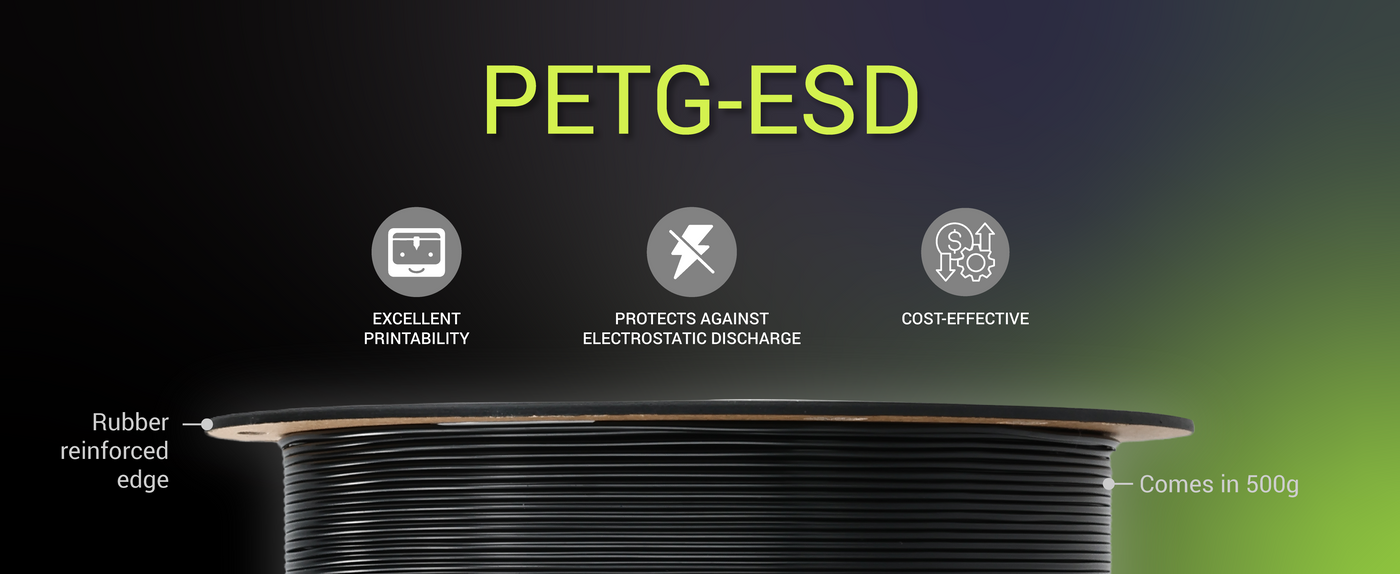
Electrostatic Discharge (ESD) Protection
Fiberon™ PETG-ESD is specifically engineered to provide reliable electrostatic discharge (ESD) safety, making it an excellent choice for 3D printing parts used in electronics manufacturing, assembly, and handling. This property helps protect sensitive electronic components from static electricity damage during production and use.
Enhanced Toughness
Beyond ESD protection, Fiberon™ PETG-ESD offers improved toughness compared to standard PETG, delivering greater impact resistance and durability for demanding industrial applications.
Advanced Carbon Nanotube Compounding
This filament is compounded with carbon nanotubes, which are responsible for its ESD-safe properties. The use of carbon nanotubes ensures consistent conductivity throughout the printed part, maintaining ESD protection even after machining or wear.
Ideal Applications
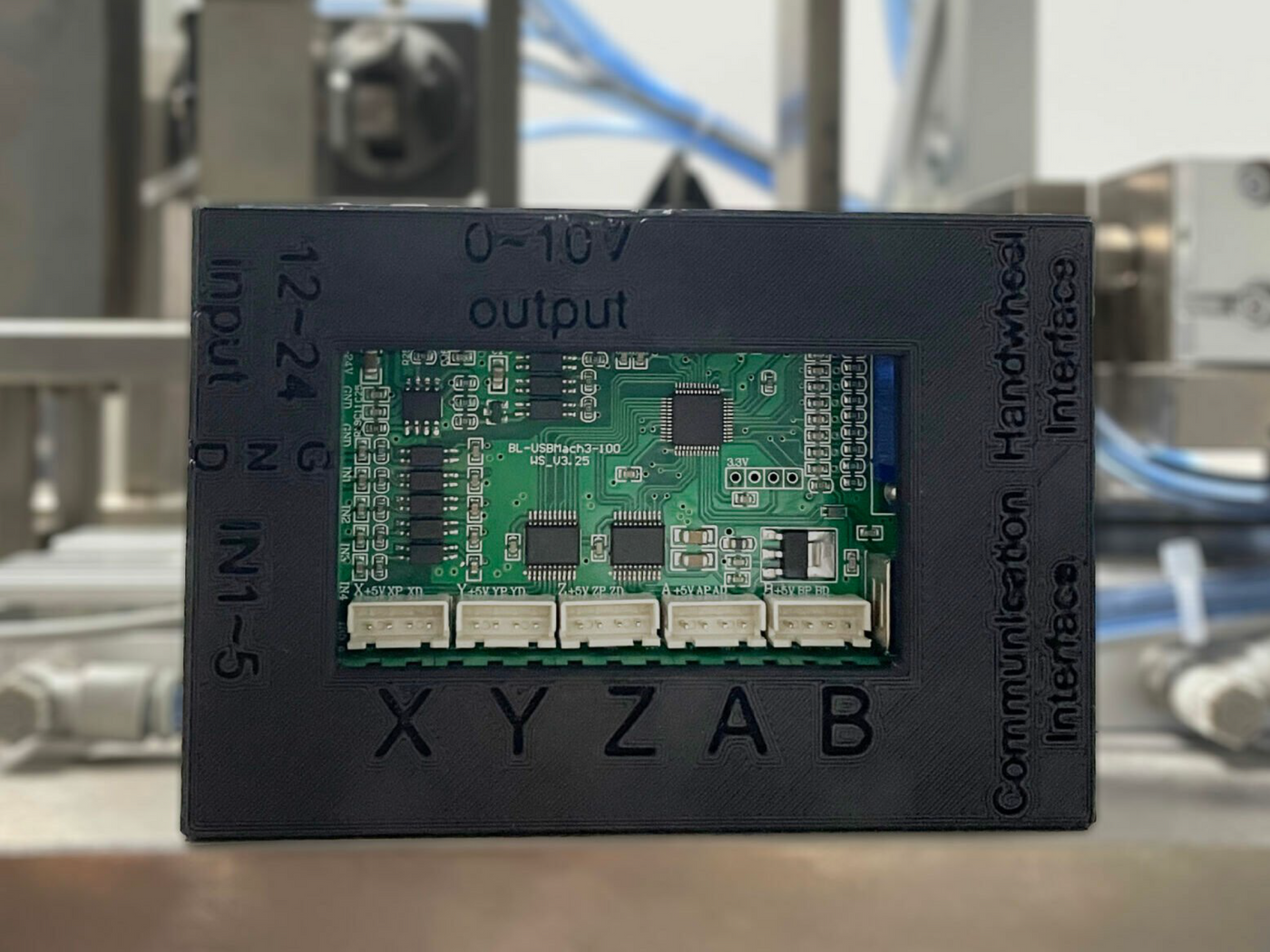
- Electronics housings and enclosures
- Jigs and fixtures for PCB assembly
- Trays and storage for electronic components
- Tools and parts used in ESD-sensitive environments
Choose Fiberon™ PETG-ESD for your electronics projects when you need a tough, reliable, and ESD-safe 3D printing material.
NOTE: ™ PETG-ESD is compounded with carbon nano-tubes:
Here is a research regarding ABS compounded with carbon nano-tubes.
Printing Requirements
Print Settings
Print Settings
Fiberon™ PETG-ESD
- ESD Protection
- Enhanced Toughness
- Carbon Nanotube Technology
- Ideal for Electronics
- Ready to Print ;
Fiberon™ PETG-ESD - Black / 0.5kg is backordered and will ship as soon as it is back in stock.

Technical Specifications
Everything you need before you hit print
- Use a hotend suitable for the 250-290°C nozzle-temperature range; an all-metal hotend is recommended.
- Dry at 65°C for 3 hours if the filament has absorbed moisture, and keep it dry during use.
- Keep the cooling fan OFF ; use a 70-80°C build plate.
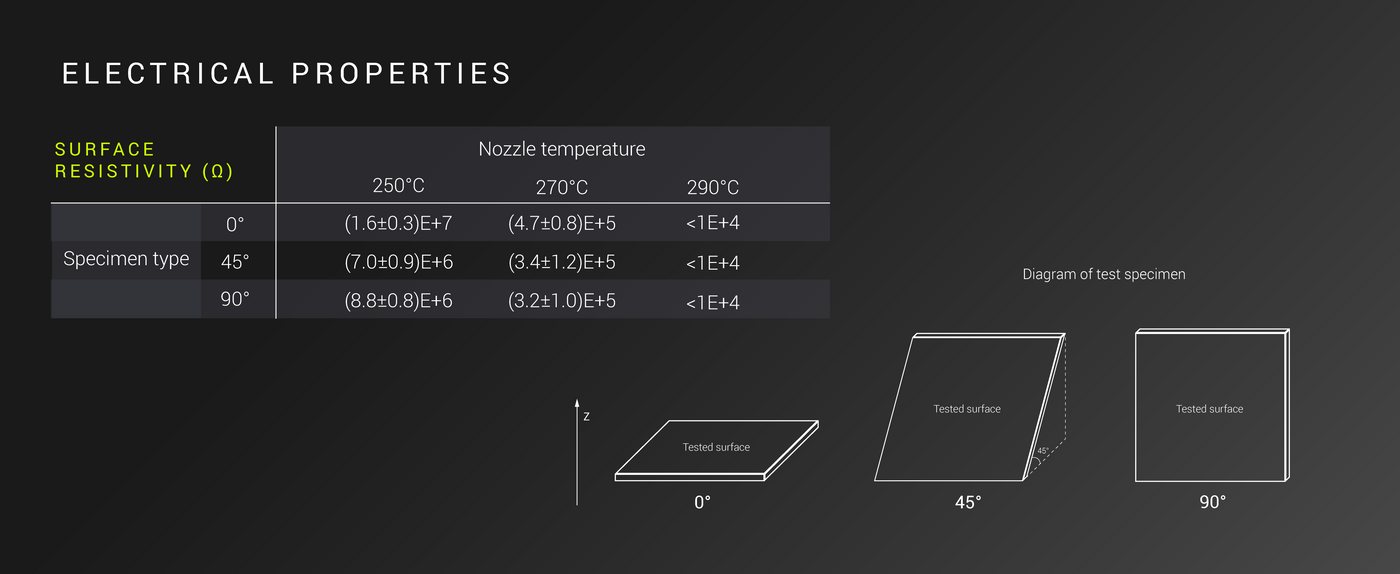
- Nozzle temperature and print orientation strongly affect surface resistivity. Higher nozzle temperatures lower resistivity; validate the finished part for the intended ESD requirement.
- Annealing is not specified for this material.
| Property | X-Y | Z | Value | Method |
|---|---|---|---|---|
| Density | — | — | 1.24 g/cm³ Important | ISO 1183 |
| Tensile strength | 36.1 MPa Important | 20.7 MPa Important | — | ISO 527 |
| Elongation at break | 7.3 % Important | 1.8 % Important | — | ISO 527 |
| Bending strength | 54 MPa Important | 24.1 MPa Important | — | ISO 178 |
| Bending modulus | 1650.8 MPa Important | — | — | ISO 178 |
| Young's modulus | 1983 MPa Important | 1626.4 MPa Important | — | ISO 527 |
| Charpy, unnotched | — | 5.2 KJ/m² Important | — | ISO 179 |
| Charpy, notched | 5.7 KJ/m² Important | — | — | ISO 179 |
| Glass transition temperature (Tg) | — | — | 77 °C Important | ISO 11357 |
| Vicat softening temperature | — | — | 86 °C Important | ISO 306 |
| HDT (0.45 MPa) | — | — | 76 °C Important | ISO 75 |
| HDT (1.8 MPa) | — | — | 72 °C Important | ISO 75 |
Tested on 100% infill specimens. X-Y = across the layers, Z = between the layers (layer adhesion).
Frequently Asked Questions
Got questions? We've got answers. From choosing the right material to caring for your spools, here's everything you need to know in one spot.
How long will PETG-ESD remain ESD safe?
Do you have any further data?
Will the spools work in an AMS?
What is the difference between PET and PETG?
Customers praised this ESD-safe filament for printing jigs and tools in electronics manufacturing, noting it "prints well and consistently" while being "more affordable than pretty much any other name brand." Quality and speed performance were highlighted, though some reported occasional plate adhesion issues and residue.
I use this filament to print ESD-safe jigs and tools for the electronics manufacturing company I work for. It prints well and consistently while being more affordable than pretty much any other name brand ESD filament on the market. Now I'm just waiting for Polymaker to do a PLA-ESD.
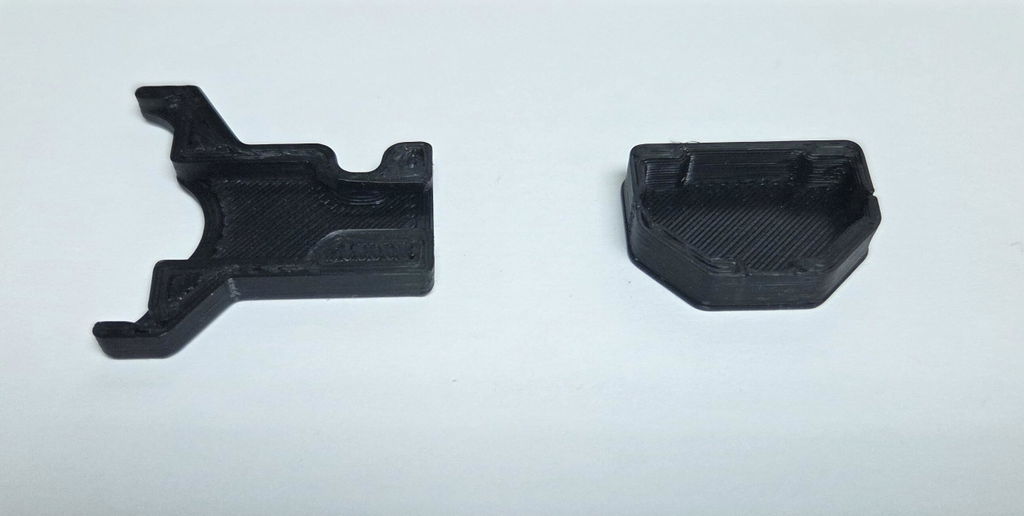
The filament prints great, but it does have an issue with sticking to the plate sometimes and leaving residue on the plate.
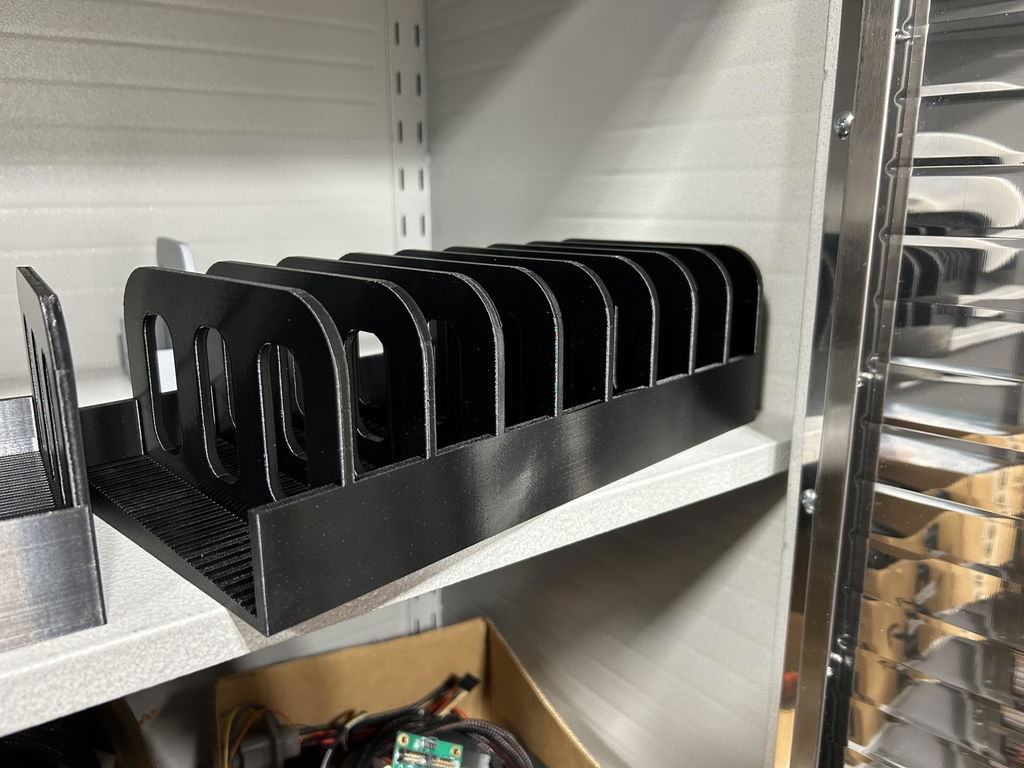
PETG-ESD filament is great! Very useful for printing ESD safe jigs for assembly. Print quality is good on Bambu printers.
Many people confuse ESD with conductive filament. This has a resistance around 1-100M ohms (10^6-10^8). You cannot test this with a basic multimeter, and even then the resistance changes as your voltage changes. With a proper ESD tester, you can measure its resistance.
Really like it, prints really well and can take speed.
This is by far the best PETG ESD I have used and is very competitively priced!I would really like to see 1kg spool though, 0.5kg spools are really annoying to work with since I'm constantly having to swap to a new spool mid print. And, with the switch to the Fiberon branding, they started taping the end of the filament to the spool core. This is a big PROBLEM as it can get stuck during when the filament runs out cause the filament runout sensor not to trigger. PLEASE revert back to not using tape.Also, I'd really like to see Polymaker submit well tuned filament profiles for all the Prusa machines to Prusa Slicer.
Printed great in my x1c. I through it straight from the package into my dryer for like 12 hours then printed from the dryer. No issues
