


5-10 days
Payments
Description
Description
Fiberon™ PET-GF15 – Glass-Fiber-Reinforced PET Filament
Bridge the gap between everyday usability and industrial performance.
High-Strength, Heat-Resistant Engineering Filament
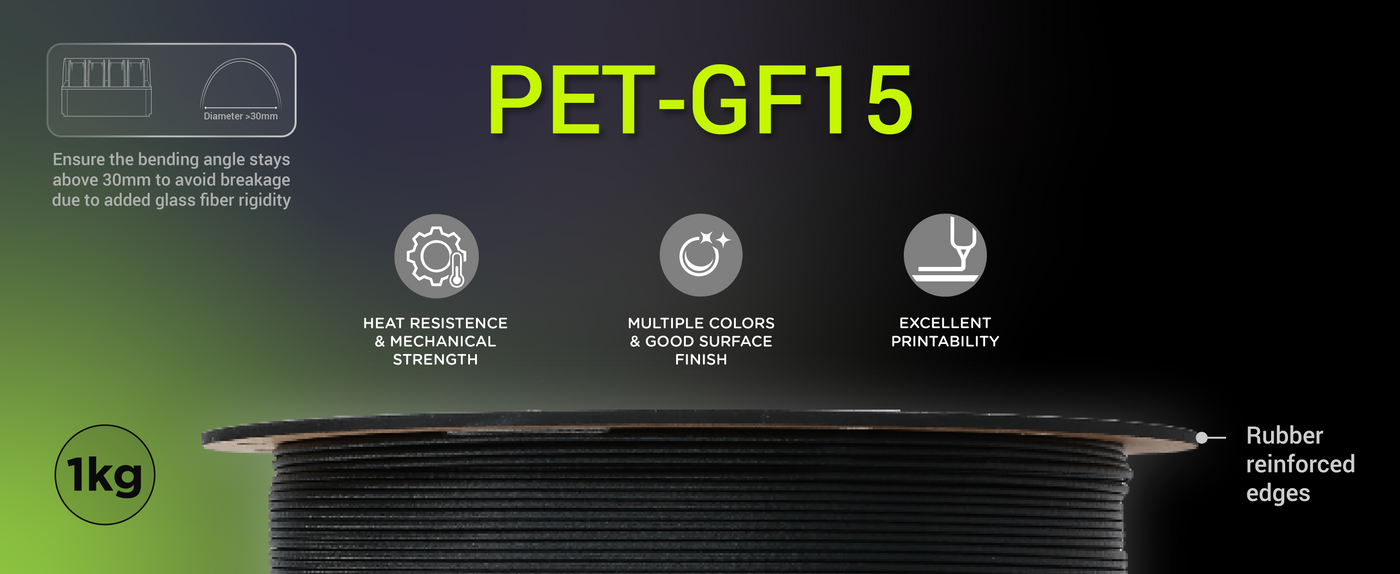
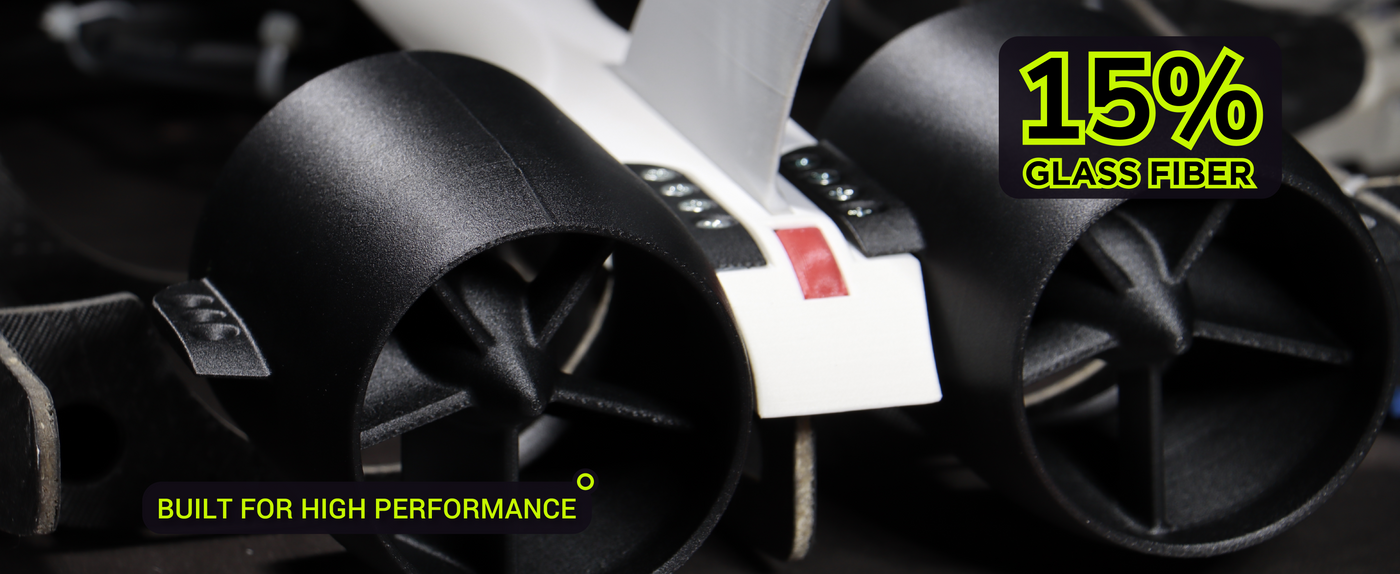
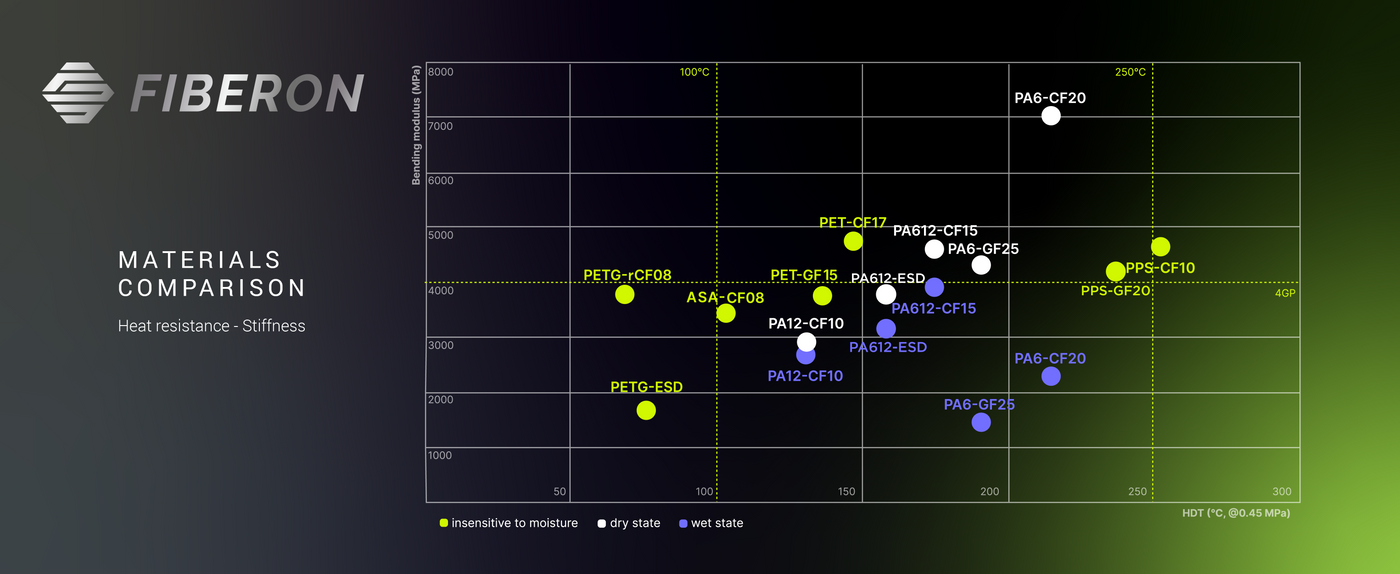
Fiberon™ PET-GF15 combines PET with 15% glass fiber reinforcement to deliver exceptional stiffness, dimensional stability, and thermal resistance. It’s engineered for users who need the toughness of an engineering-grade filament without sacrificing printability.
Industrial-Level Performance, Everyday Usability
With a bending strength of 104 MPa and HDT up to 133 °C (0.45MPa, after annealing), PET-GF15 withstands high stress and high-temperature environments where other materials would deform. It prints easily on most modern FDM printers, even at speeds up to 250 mm/s.
Excellent Surface Finish & AMS Compatible
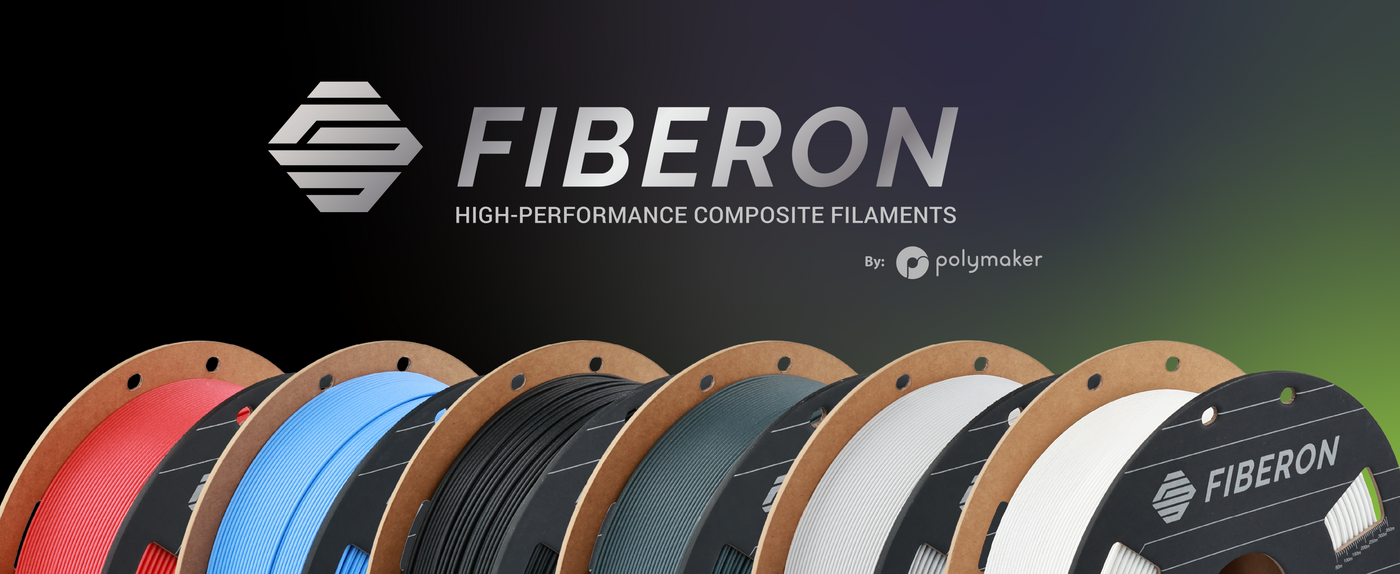
Achieve smooth, professional-grade prints with a refined texture that minimizes visible layer lines. Available in six vibrant colors, Fiberon™ PET-GF15 works seamlessly with most multi-material systems, perfect for multi-color and multi-material projects.
Dimensional Stability & Low Warping
PET-GF15 maintains consistent accuracy and minimal warping, even on large projects. After annealing, dimensional change stays below 0.5 %, ensuring tight tolerances for functional parts that demand reliability and precision.
Designed for Professionals & Makers Alike
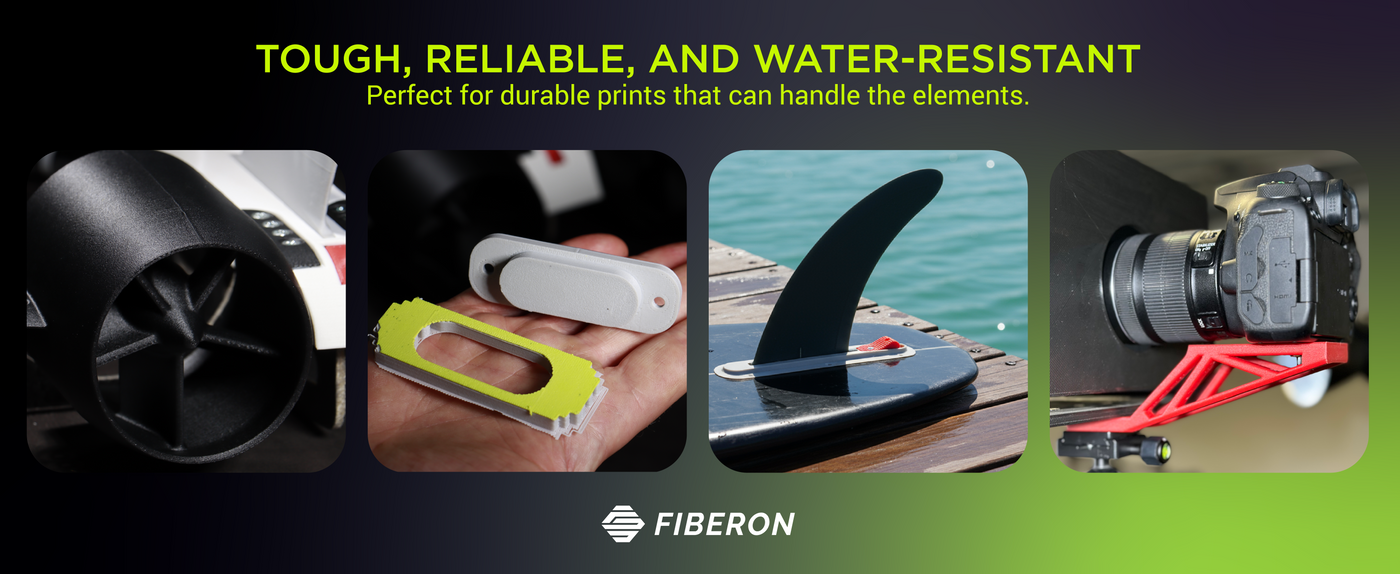
Ideal for automotive parts, jigs, fixtures, Industrial parts, and prototyping, PET-GF15 offers excellent toughness and resists brittleness. Whether you’re a professional engineer or advanced hobbyist, PET-GF15 delivers industrial-grade results with a user-friendly experience.
Warning: PET-GF filament adheres strongly to textured PEI plates—allow plate to cool before removal or use a release agent to prevent damage.
Printing Requirements
Print Settings
Print Settings
Fiberon™ PET-GF15
- High Strength & Stiffness
- High Heat Resistance
- Easy to Print
- Low Warping
- Ready to Print
Fiberon™ PET-GF15 - Black / 1kg is backordered and will ship as soon as it is back in stock.

Technical Specifications
Everything you need before you hit print
- Use a wear-resistant nozzle, such as hardened steel or ruby; the TDS notes that brass-nozzle life may be approximately 9 hours.
- Store and print under dry conditions (relative humidity below 20%); dry at 100°C for 10 hours before use.
- An enclosed printer is recommended; keep the chamber door closed during printing.
- Use glue as a release layer on textured PEI and wait until the build plate reaches room temperature before removing the print.
- Anneal at 120°C for 16 hours for the best heat resistance and mechanical performance.
- During annealing, avoid applied loads and non-uniform oven temperature, and retain supports where needed to limit deformation.
| Property | X-Y | Z | Value | Method |
|---|---|---|---|---|
| Tensile strength | 59.9 MPa Important | 48.2 MPa Important | — | ISO 527 |
| Elongation at break | 4 % Important | 2.6 % Important | — | ISO 527 |
| Bending strength | 104.2 MPa Important | 80.3 MPa Important | — | ISO 178 |
| Bending modulus | 3705.4 MPa Important | 2998.4 MPa Important | — | ISO 178 |
| Young's modulus | 4144.2 MPa Important | 3428.9 MPa Important | — | ISO 527 |
| Charpy, unnotched | 27.2 KJ/m² Important | 13.9 KJ/m² Important | — | ISO 179 |
| Charpy, notched | 8.7 KJ/m² Important | — | — | ISO 179 |
| Melting temperature | — | — | 231.6 °C Important | ISO 11357 |
| Glass transition temperature (Tg) | — | — | 59.5 °C Important | ISO 11357 |
| Vicat softening temperature | — | — | 232.6 °C Important | ISO 306 |
Tested on 100% infill specimens. X-Y = across the layers, Z = between the layers (layer adhesion).
Frequently Asked Questions
Got questions? We've got answers. From choosing the right material to caring for your spools, here's everything you need to know in one spot.
What is PET-GF15?
Is Fiberon™ PET-GF15 easy to print with?
Do I need a hardened nozzle to print PET-GF15?
Can I print PET-GF15 on an open-frame printer?
Is annealing required?
How should I store PET-GF15?
Is Fiberon™ PET-GF15 AMS-compatible?
What applications is PET-GF15 best suited for?
How does the surface finish compare to other glass-fiber filaments?
Is the packaging sustainable?
Customers praised this glass fiber-reinforced engineering filament for exceptional strength, durability, and ease of printing. "Most versatile filament I've used," with excellent heat and chemical resistance at a competitive price. Some noted challenges with overhangs and moisture sensitivity. A few mentioned softening at 60°C and limited color options.
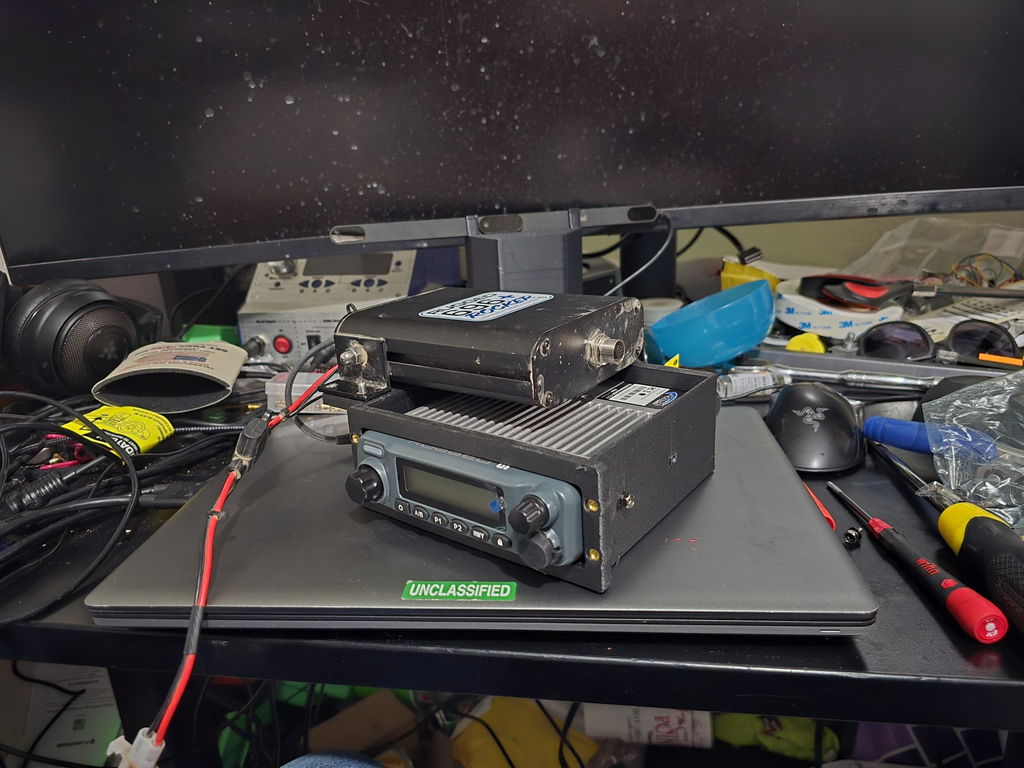
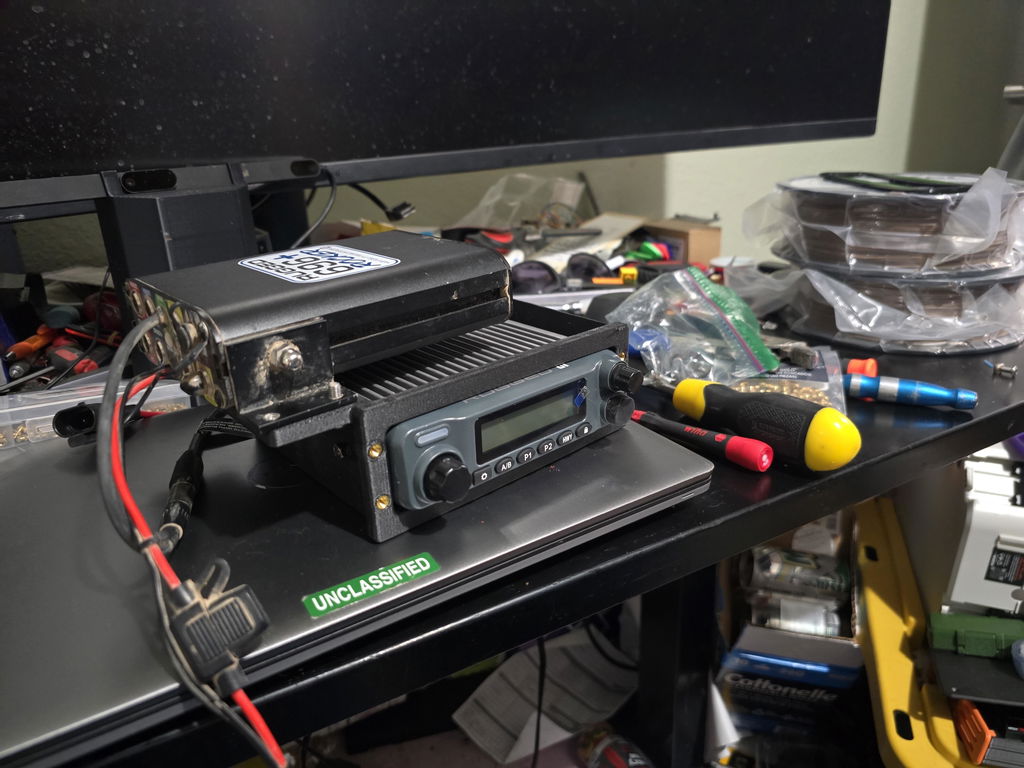
Used to make a mount for a radio and an intercom for my SxS. Turned out beautifully.
Polymaker PET-GF15 is an excellent engineering filament with impressive strength, stiffness, dimensional stability, and heat resistance. It prints cleanly and produces parts that feel much more rigid and durable than standard PETG.
I use it to make custom replacement parts for my WaveRaider and other marine projects. The material has held up very well around water, vibration, and changing temperatures, making it a great choice.
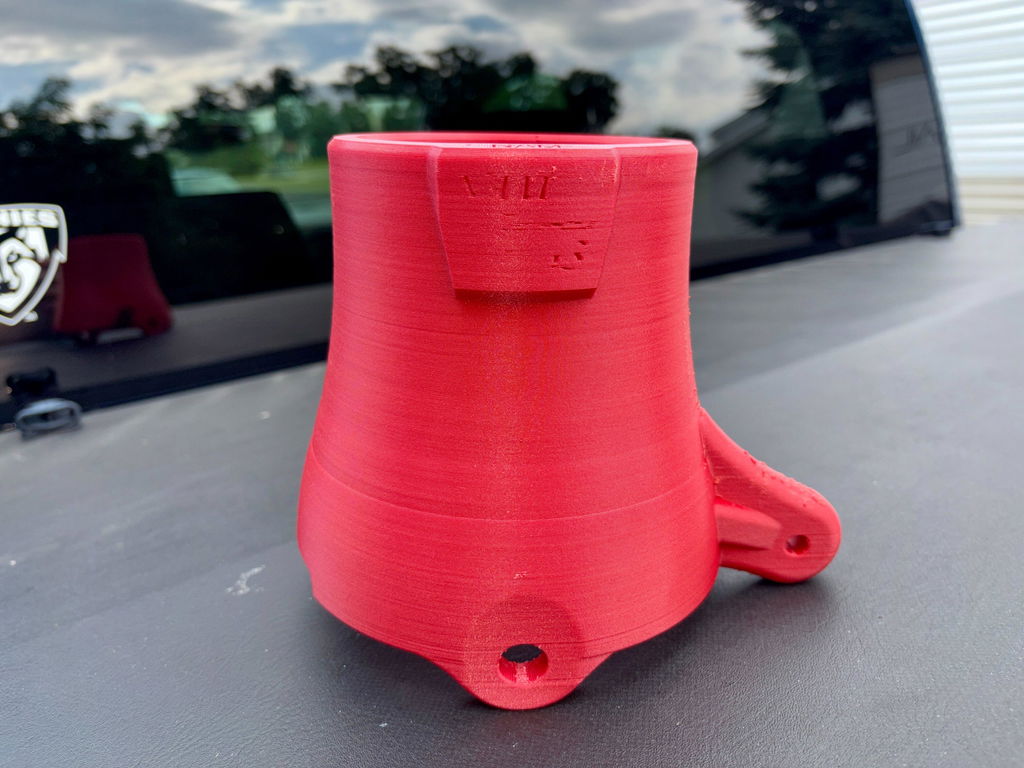
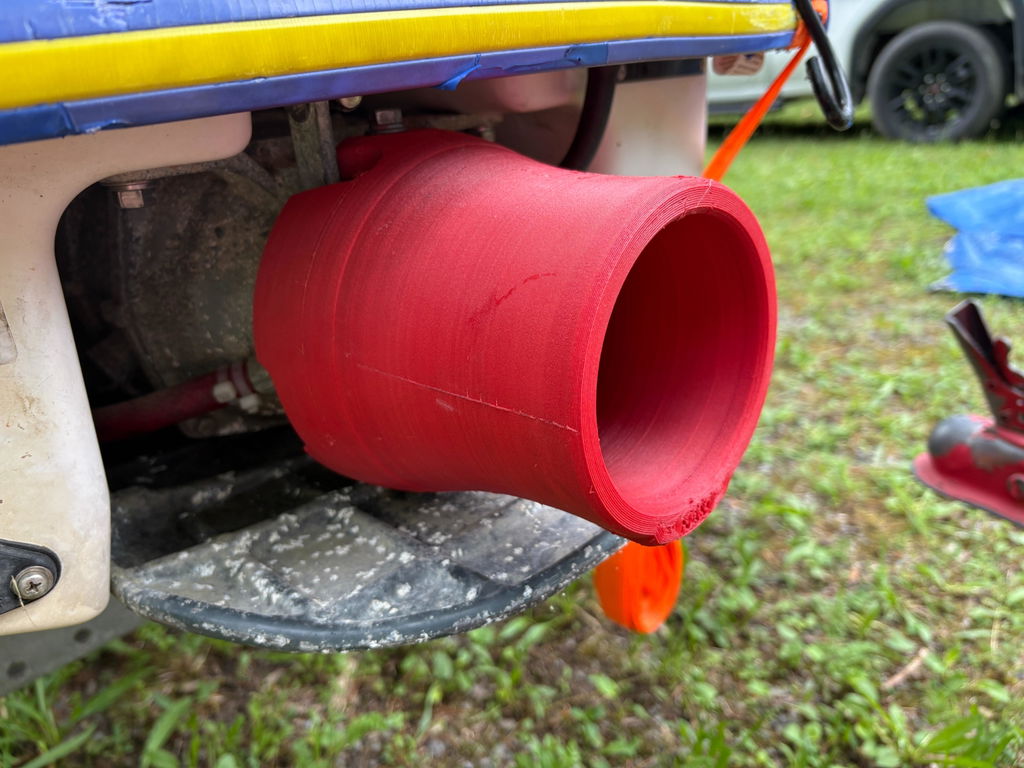
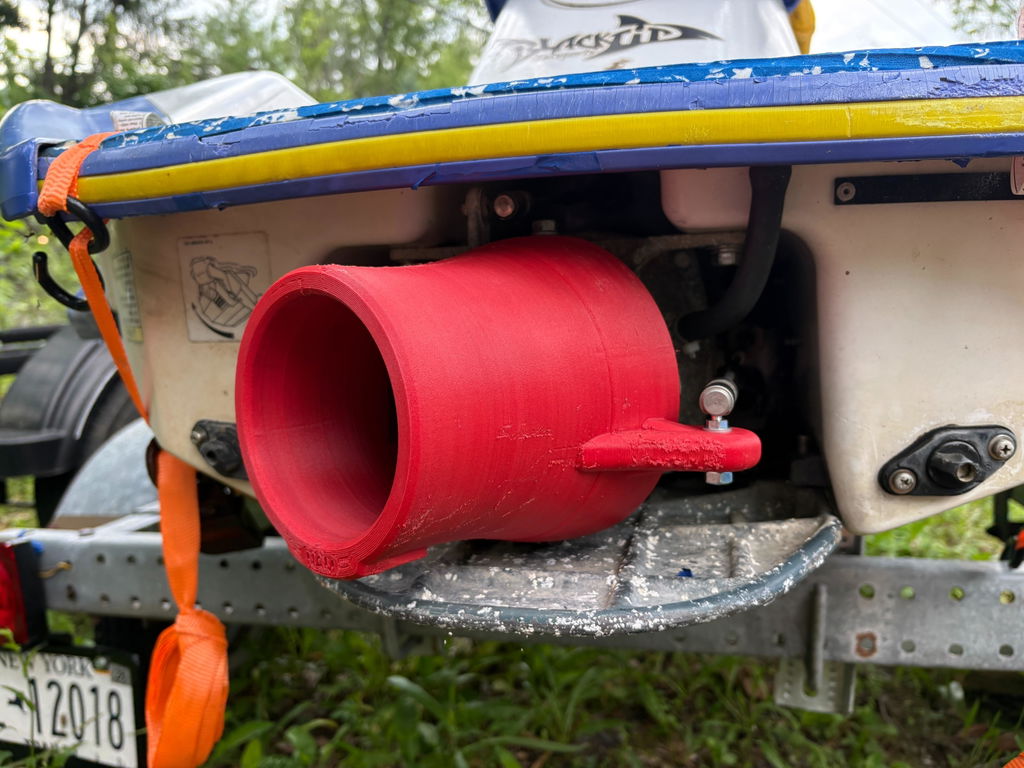
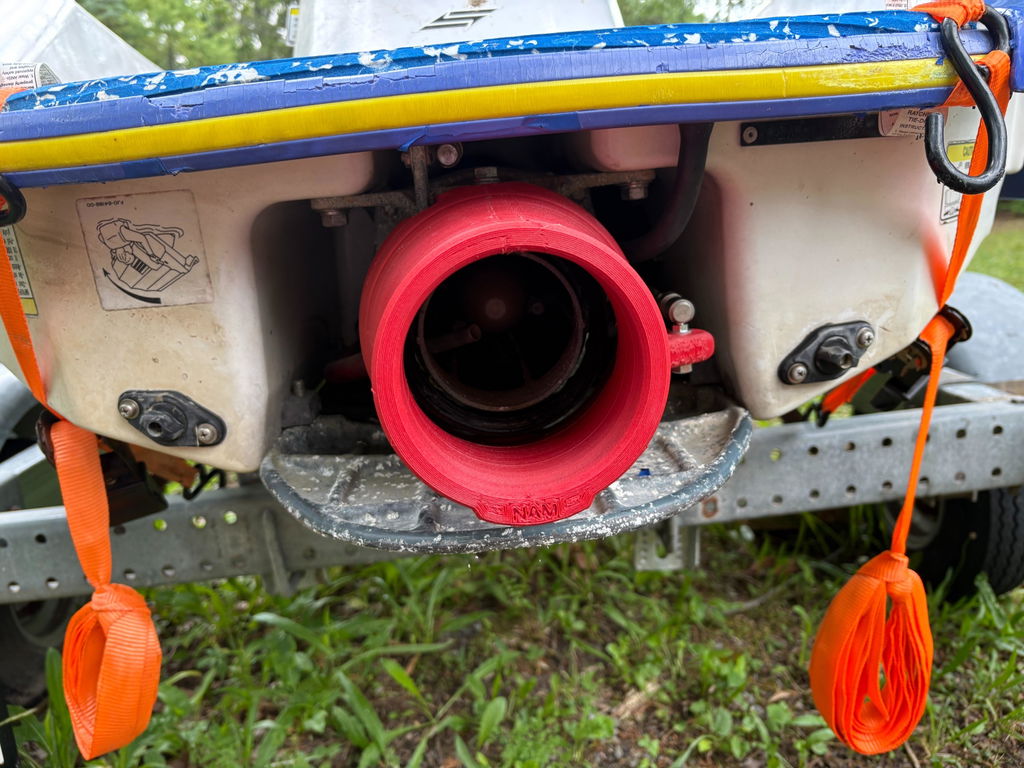
Absolutely the best filament on the market! Prints easy, strong reliable. Just need more in stock!
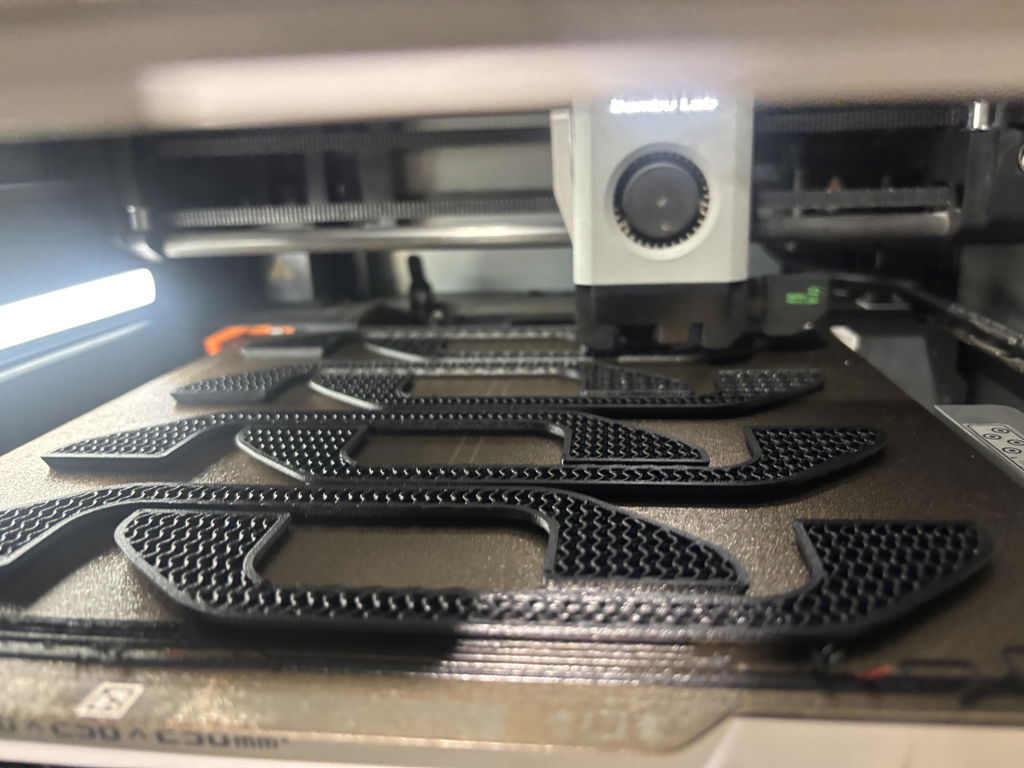
This is easily the most versatile filament I've used. Extremely tough, heat and weather resistance beyond what you would expect, and easier to print/keep dry than PetG. If you have the ability to run enclosed with a higher nozzle temp (I'm currently running 290 on a prusa core one) this is one you have to try.
Prints super easily and cleanly just be careful with PEI beds
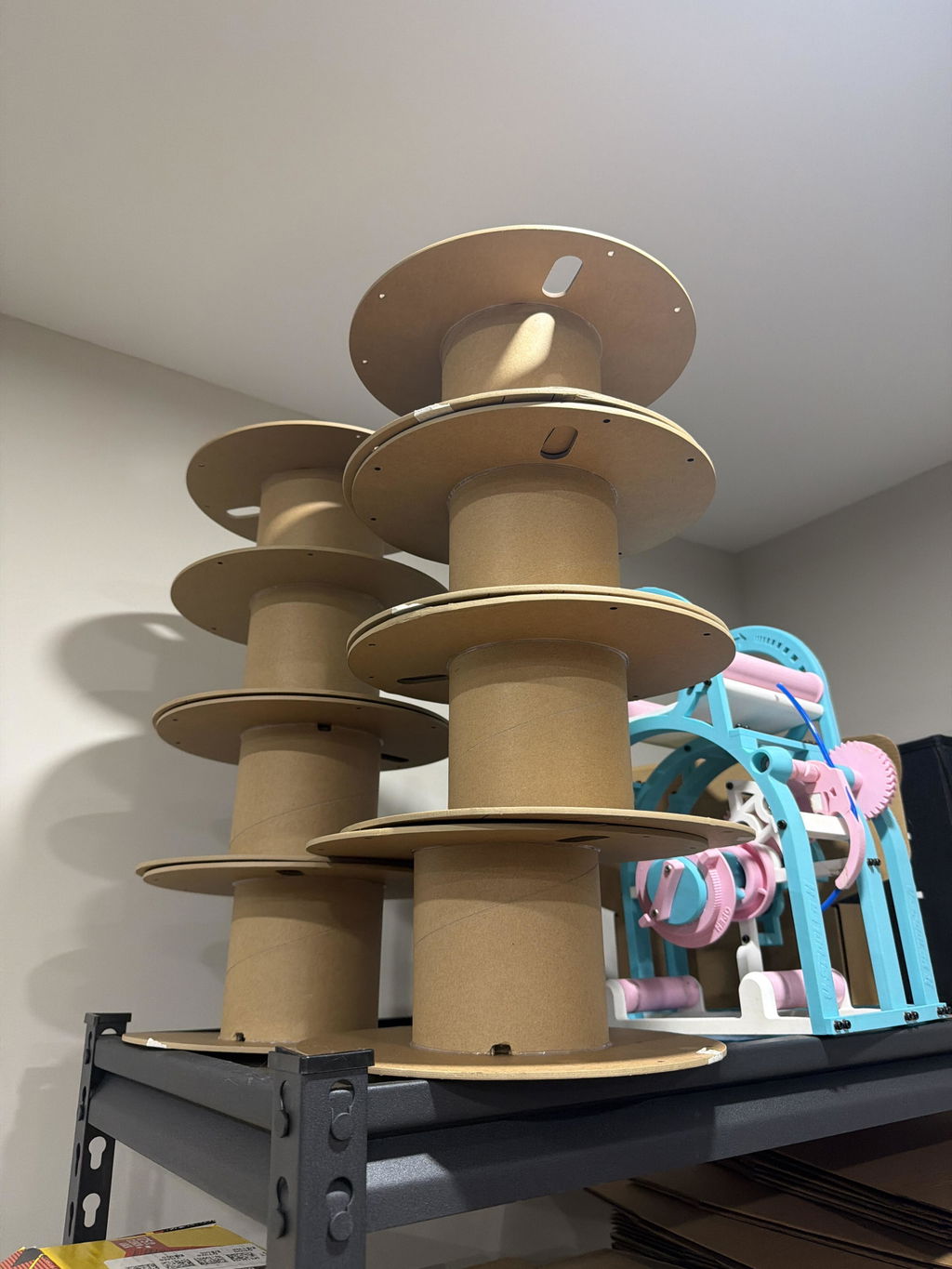
Fiberon™ PET-GF15 is a high-quality filament that stands out for its impressive strength and durability. The glass fiber reinforcement provides excellent stiffness, making it ideal for functional parts and mechanical applications. Printing is generally smooth with good layer adhesion, though a hardened nozzle is recommended due to its abrasive nature. Surface finish is slightly matte and textured, which adds a professional look to prints. Overall, it’s a reliable choice for users who need robust, engineering-grade results.
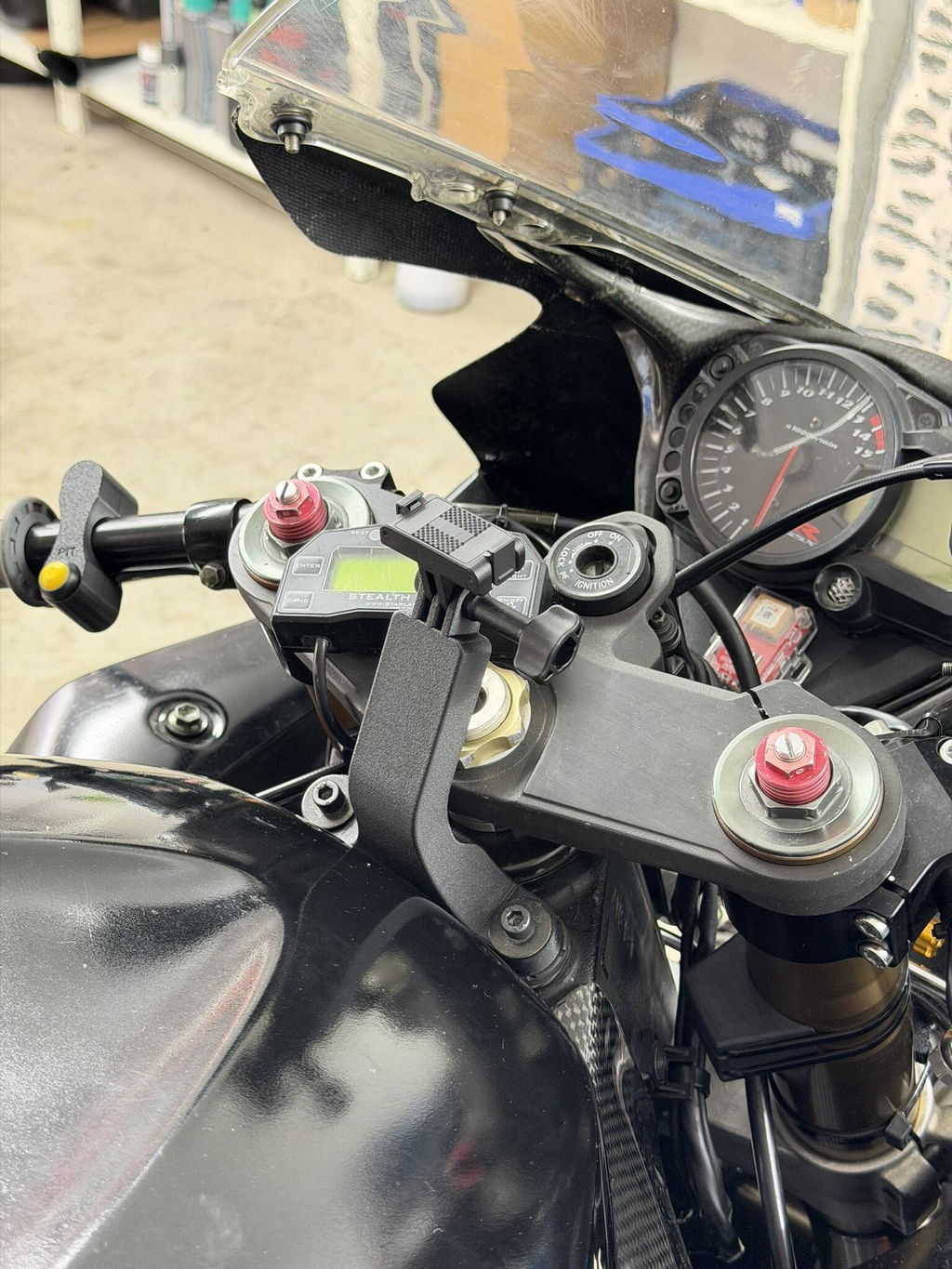
Le meilleur filament et de loin
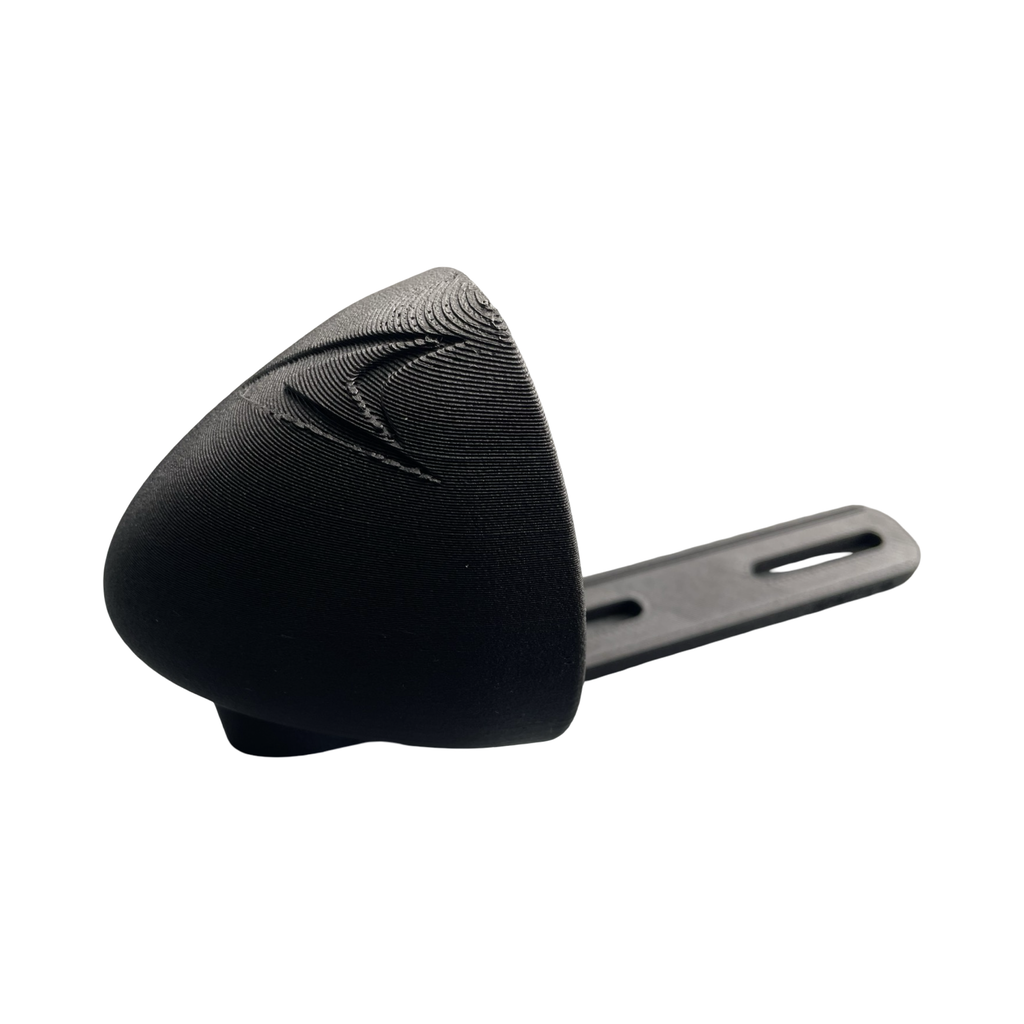
Sans aucun doute le meilleur filament que j’ai pus utiliser. Grand adepte de fiberon mais le PET GF15 a tout d’un grand filament à un prix très convenable. Un rendu exceptionnel, une résistance excellente.
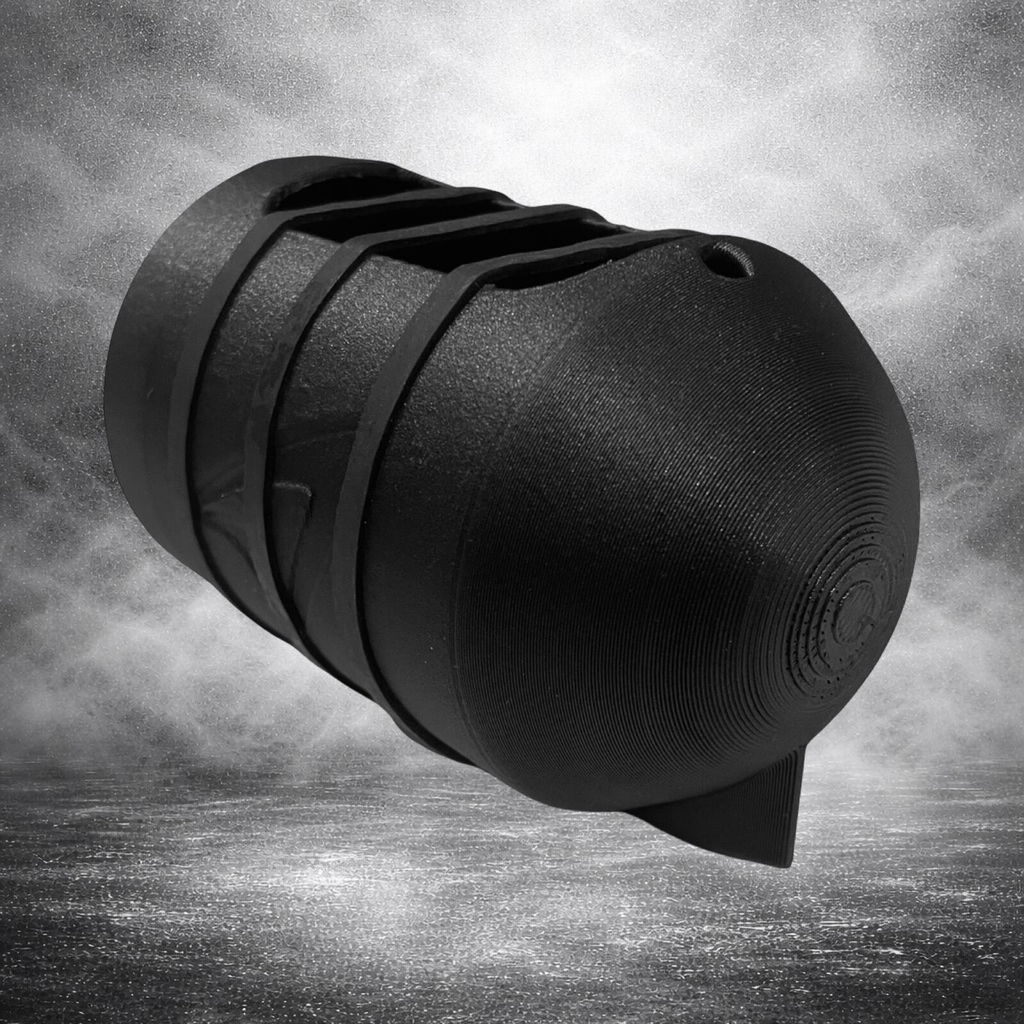
Best priced and easiest to print high-temperature engineering filament currently on the market.
It does take some work to get it to print overhangs properly, though slowing down the outer wall speed to 40mm/s and having the cooling fan turn on at 50% for all outer walls and overhangs fixes that issue.
The fan settings otherwise are: 0%, 30% at 30s, 6s min/max.
I print at 0.25mm layer height, 1mm line width, and 3 walls on 0.6mm HF nozzles.
The printers I use are Bambu X1C, P2S, and H2D.
The nozzle temp is 300C, and the filament max VFR set to 20^3mm/s, which maxes speed at 80mm/s. The results are perfect, strong, and fast.
The only drawbacks I’ve found with this PET-GF15 are:
1) It’s difficult to dry after it absorbs moisture and prints terribly when damp,
2) It really doesn’t like being smushed too much. Most filaments I can print at 0.15mm layer height, 1mm line width on a 0.6mm HF nozzle, but this is a pain to use even at 0.2mm height,
3) It needs to be annealed for high temperature applications,
4) The only color available for the 3kg spools (which is all I use) is black. Polymaker, please add at least the blue and red as options for the 3kg spools! I’ll buy a few of each the moment they’re available.
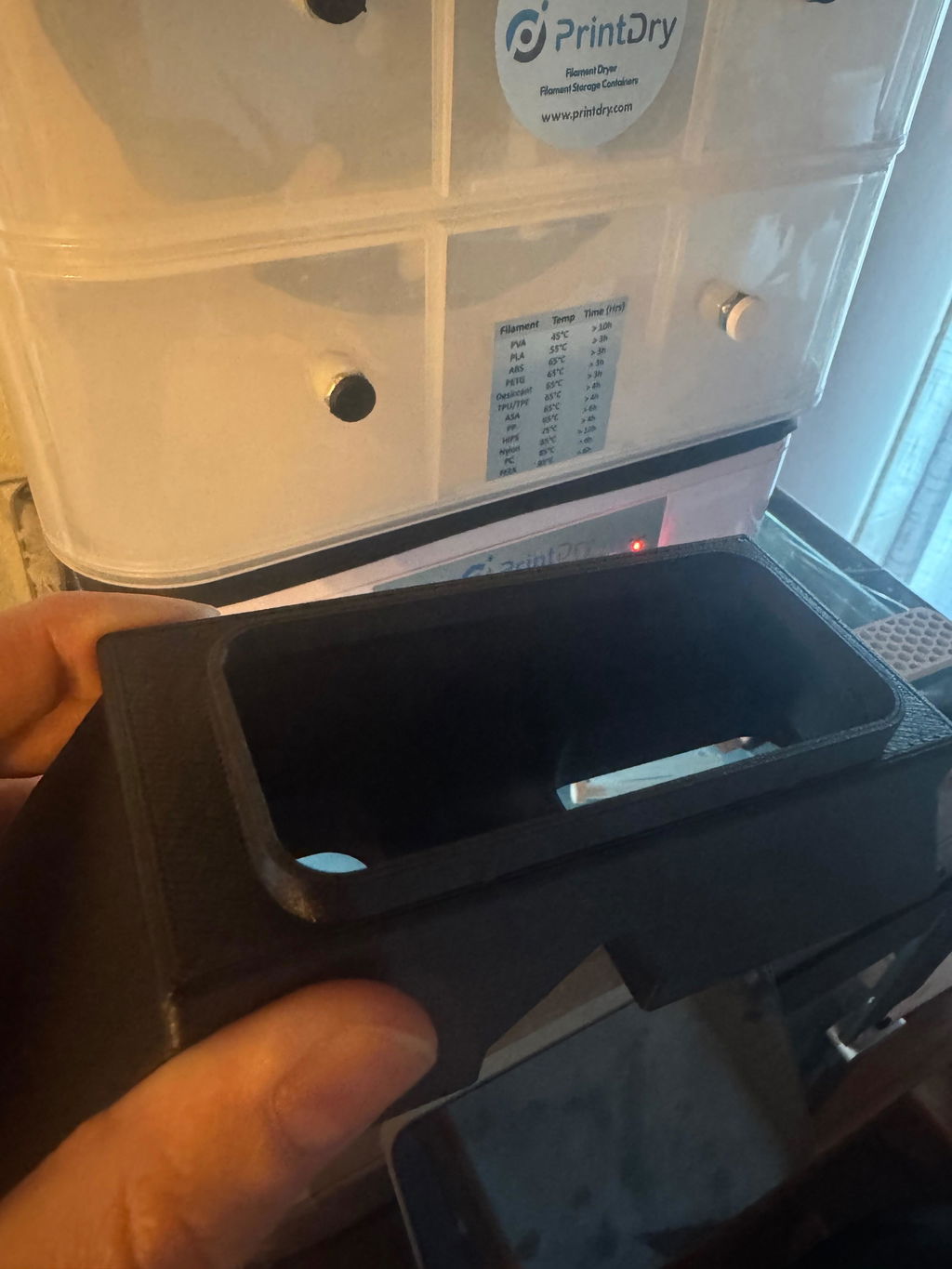
It's a bit tricky to get the settings fine-tuned and definitely doesn't like overhangs. BUT! once you get it dialed it it's a ridiculously durable material.
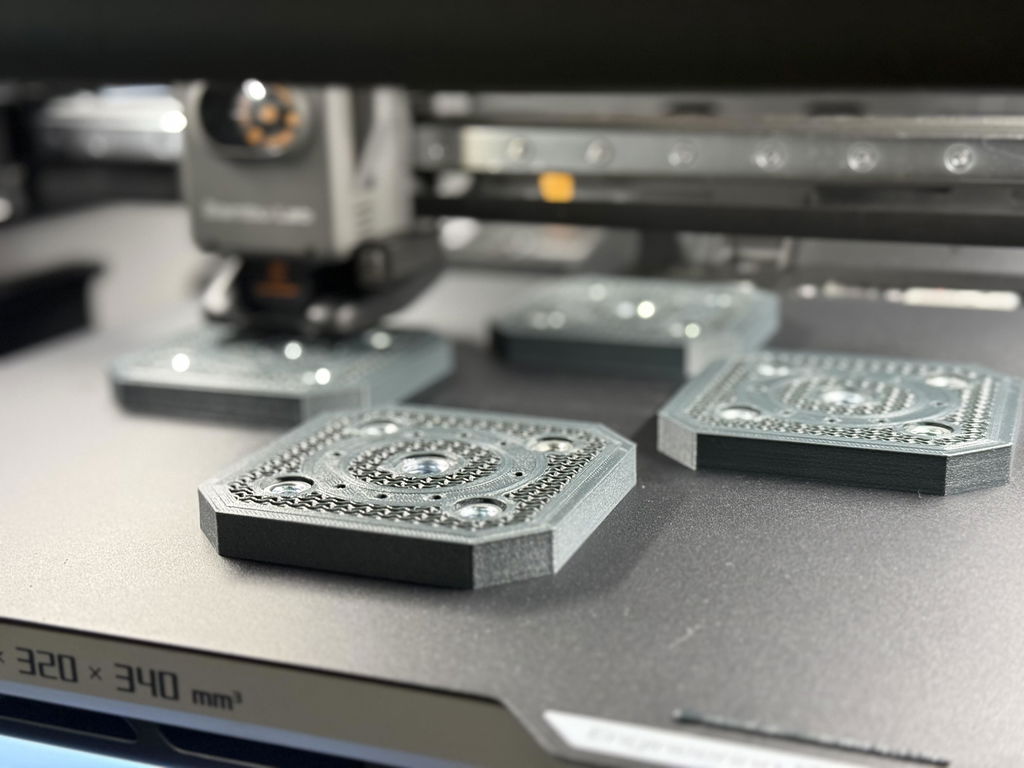
This is a fantastic filament. I’ve found it easy and reliable to print large objects using the the H2D/H2, Polymaker profile, Bambu Engineering Plate, Visionminer NPA. The glass fiber has better layer adhesion than PET-CF and does not cause problems with static when printing camera parts, film holders. It has a lovely appearance. I’ve gone through more than 10x 3kg rolls. Incredibly well priced.
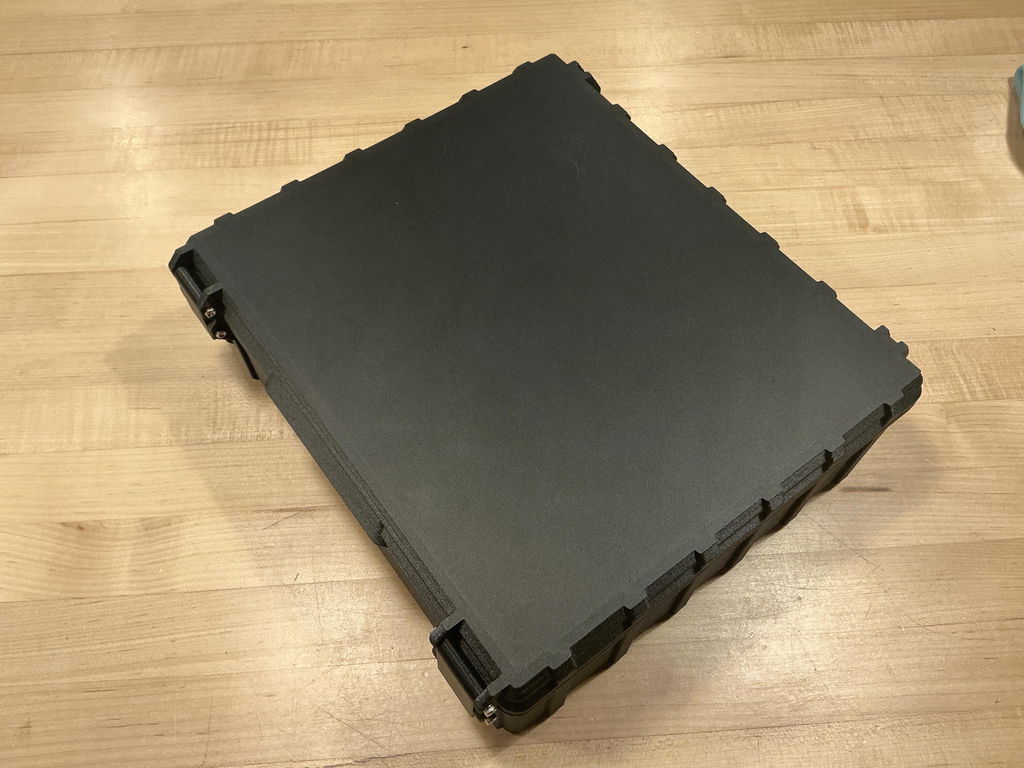
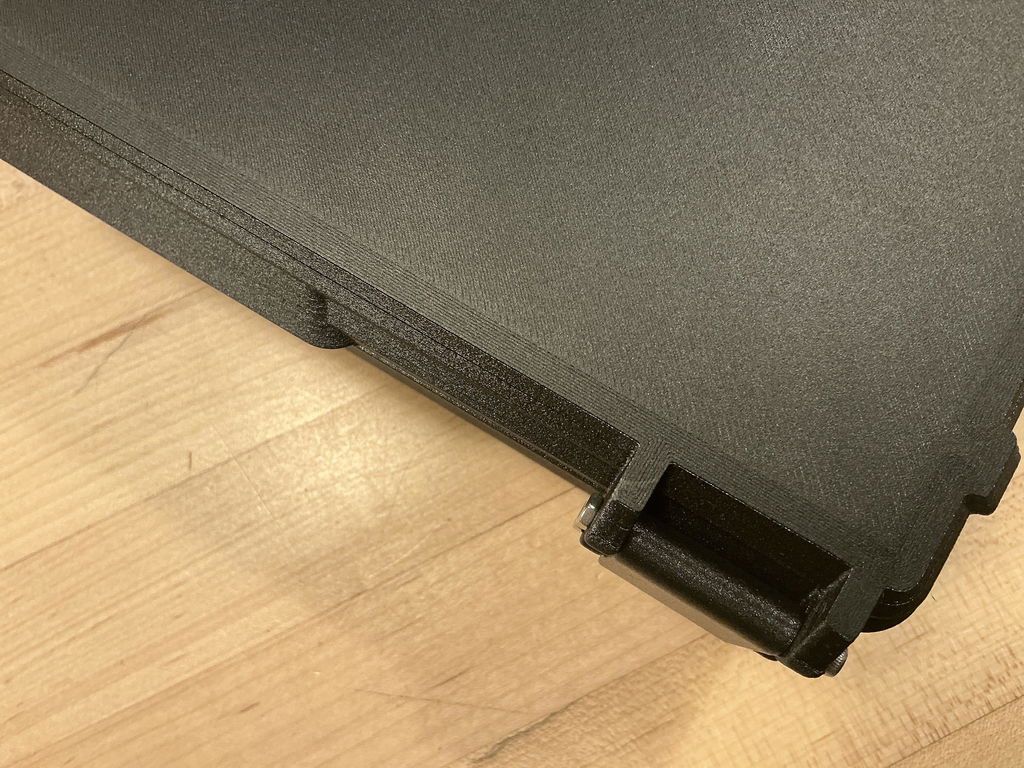
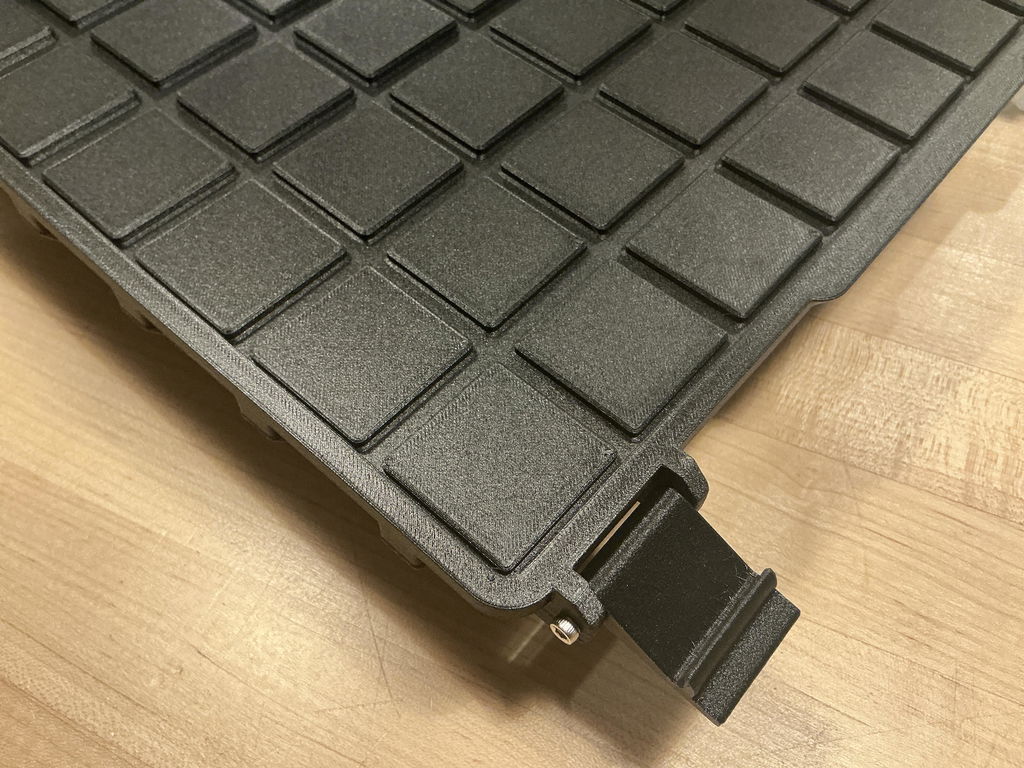
Excellent color, bright and good contrast against white for multicolor prints
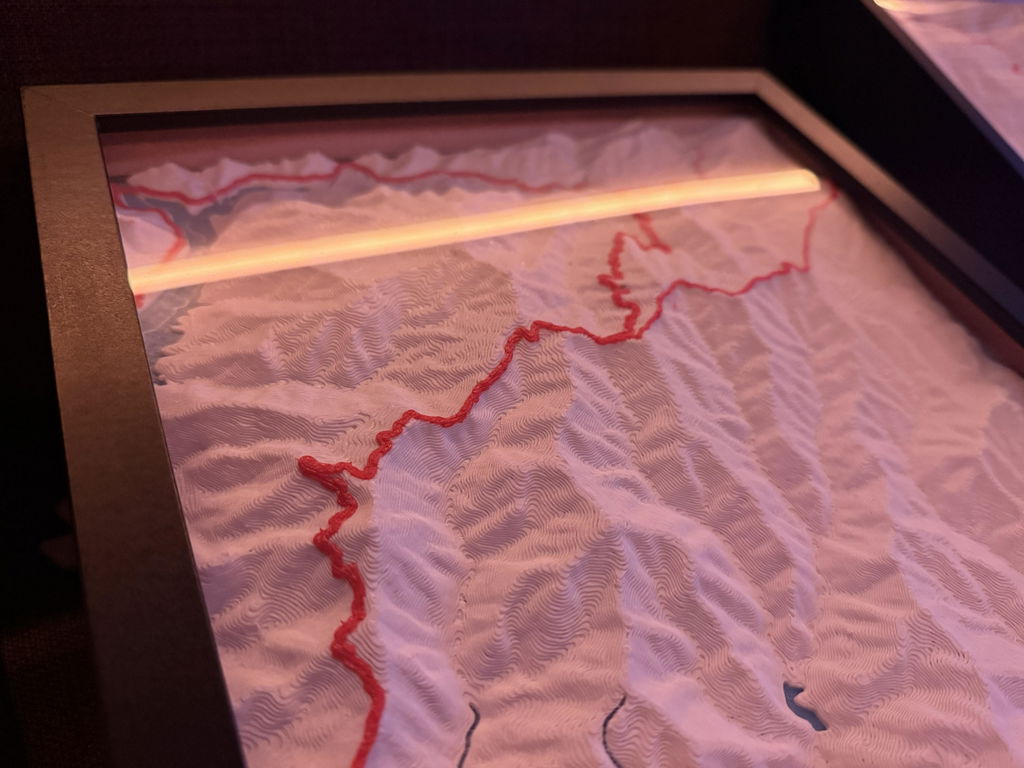
I ordered this filament for the first time about a month ago. I have gone through 12 spools already. It is really impressive stuff. Hopefully Polymaker will release more colors soon. I really want a darker blue for an upcoming project.
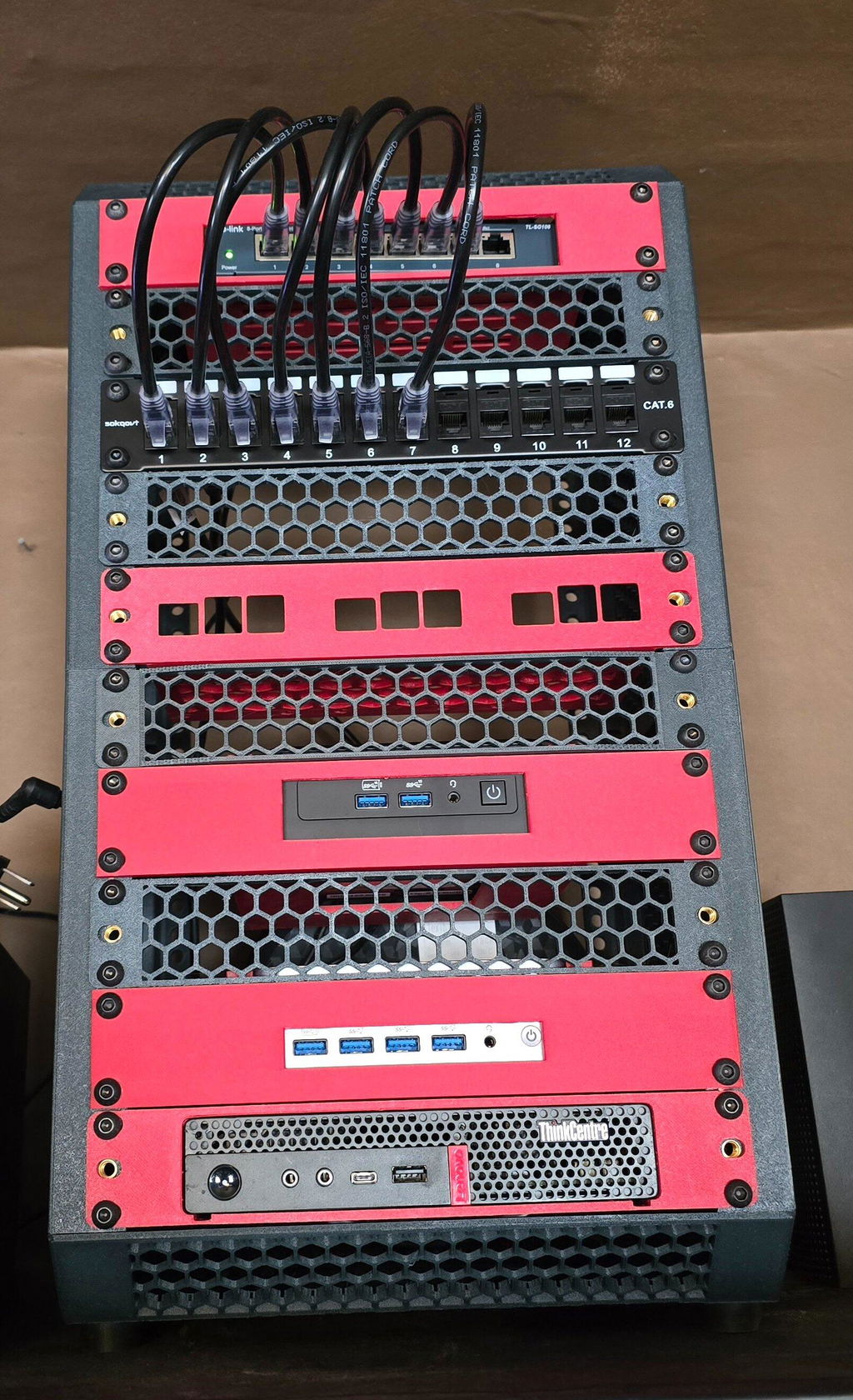
Gorgeous and stronk. My prints are punching well above their weight for dimensional strength. Using this as shelf brackets.
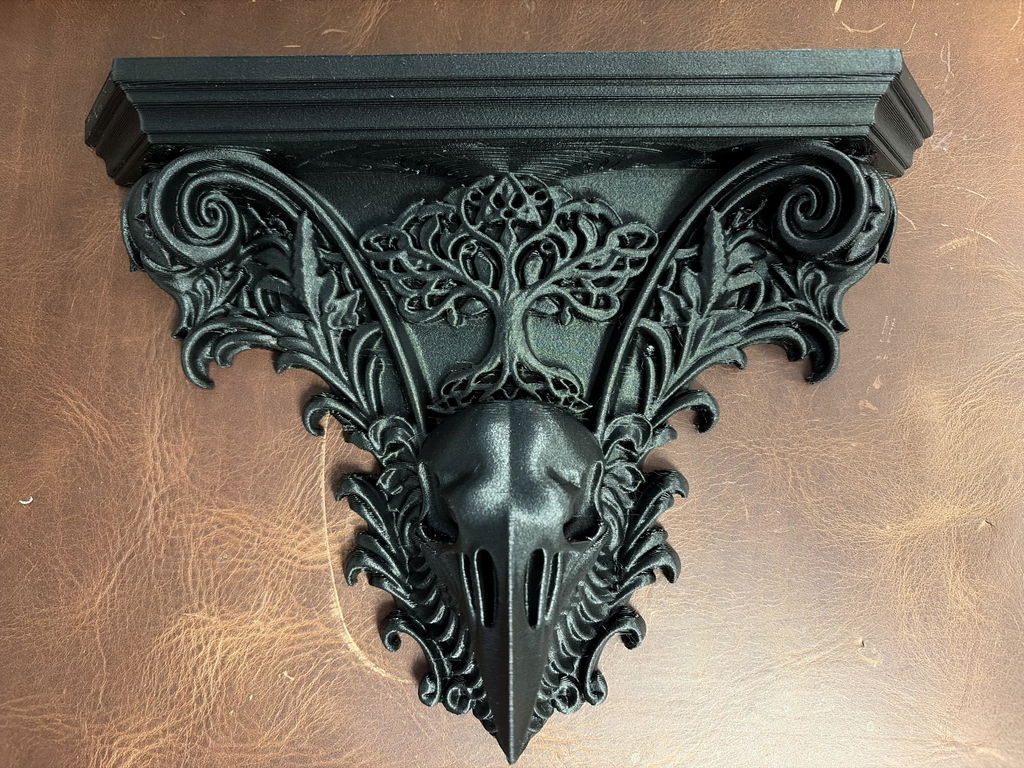
My new favorite material/filament. Easy, beautiful prints with great mechanical and thermal properties, and in color? What's not to love? I'm a huge fan of PET-CF filaments, but it's great to have a slightly more flexible option with similar properties.
I just wish it came in more colors.
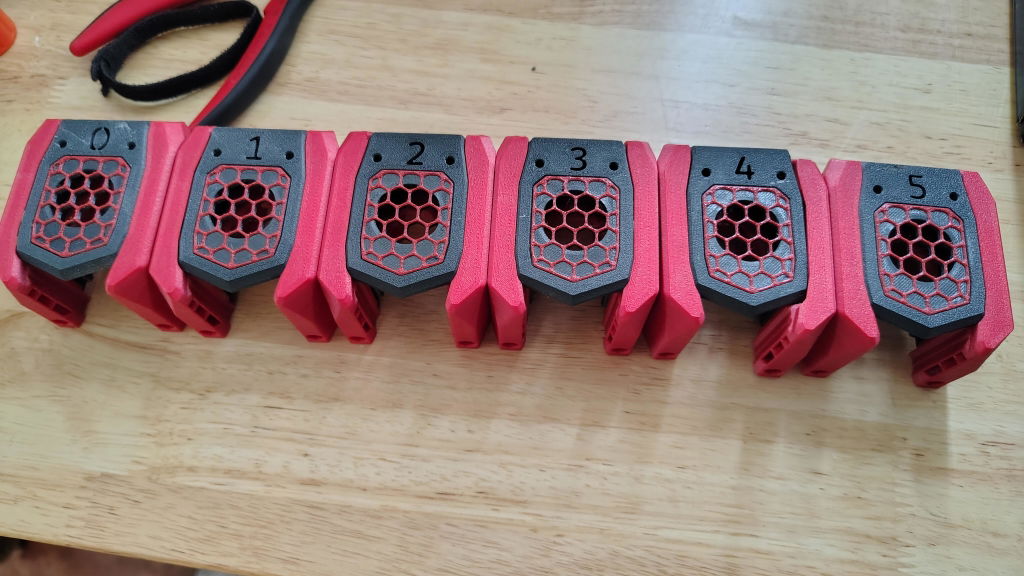
I thought PET-GF15 was going to be an intimidating filament to work with as it was the 1st 300 degree print I had ever made. BUT, it went super smooth. Well it's not smooth, it prints with an awesome texture. It seems really rigid so far and appears to be a bit heat resistant when I hit it with a torch to clean up any details not much happens. It can be set to a higher flow too (28mmon a .6mm nozzle) if your hardware allows it.. Overhangs print nicely, good adhesion to a textured pei plate and releases easily once cooled off. I now have a bunch on the shelf! One of my GO-TO filaments!
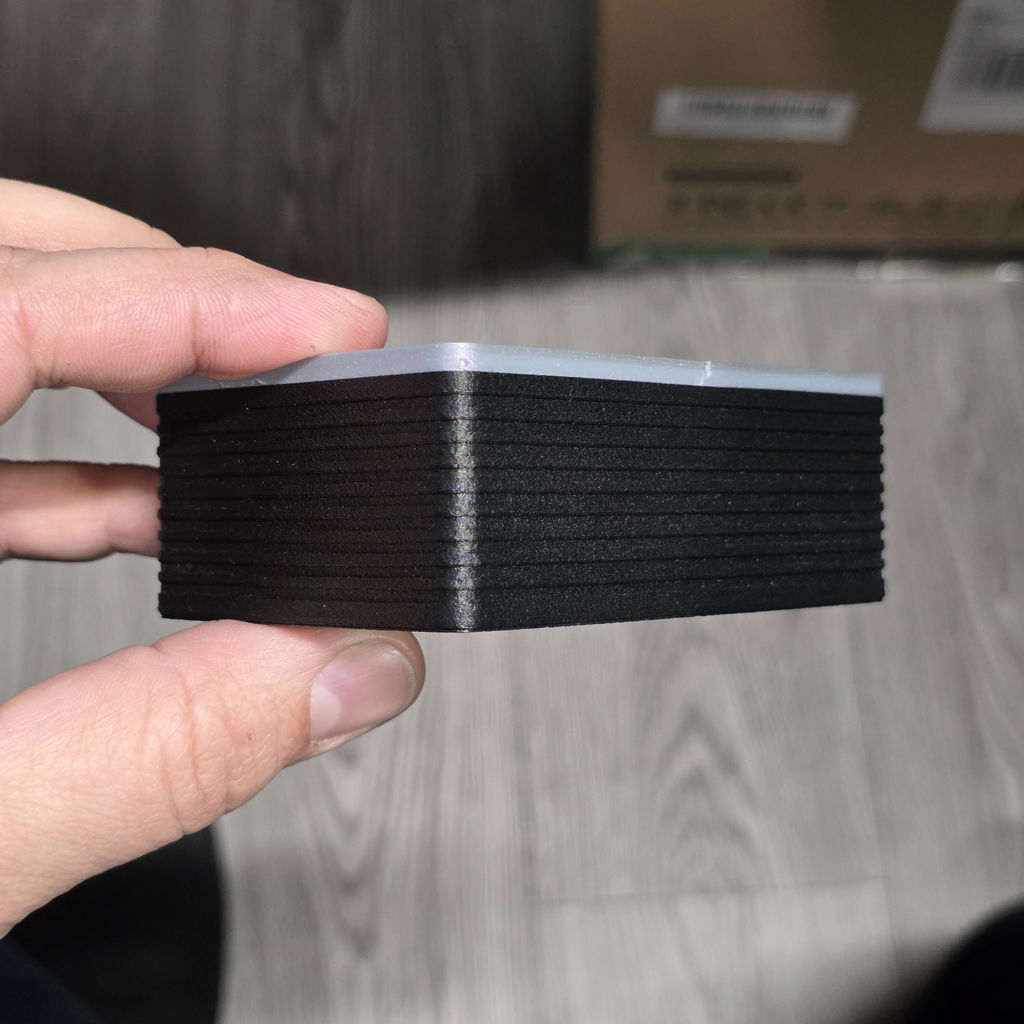
Prints excellently, after annealing it its incredibly strong, the fiber also makes for really pretty parts.
Parfait
Ordering more as I type
Printed very nice ordering another set of rolls
Awesome filament. Easy to print with excellent mechanical properties and value.
Todavías no lo he podido usar pero biene bien empaquetado en caja de cartón y una sólida bolsa con un excelente vacío. Las etiquetas de las cajas contienen toda la información necesaria.
